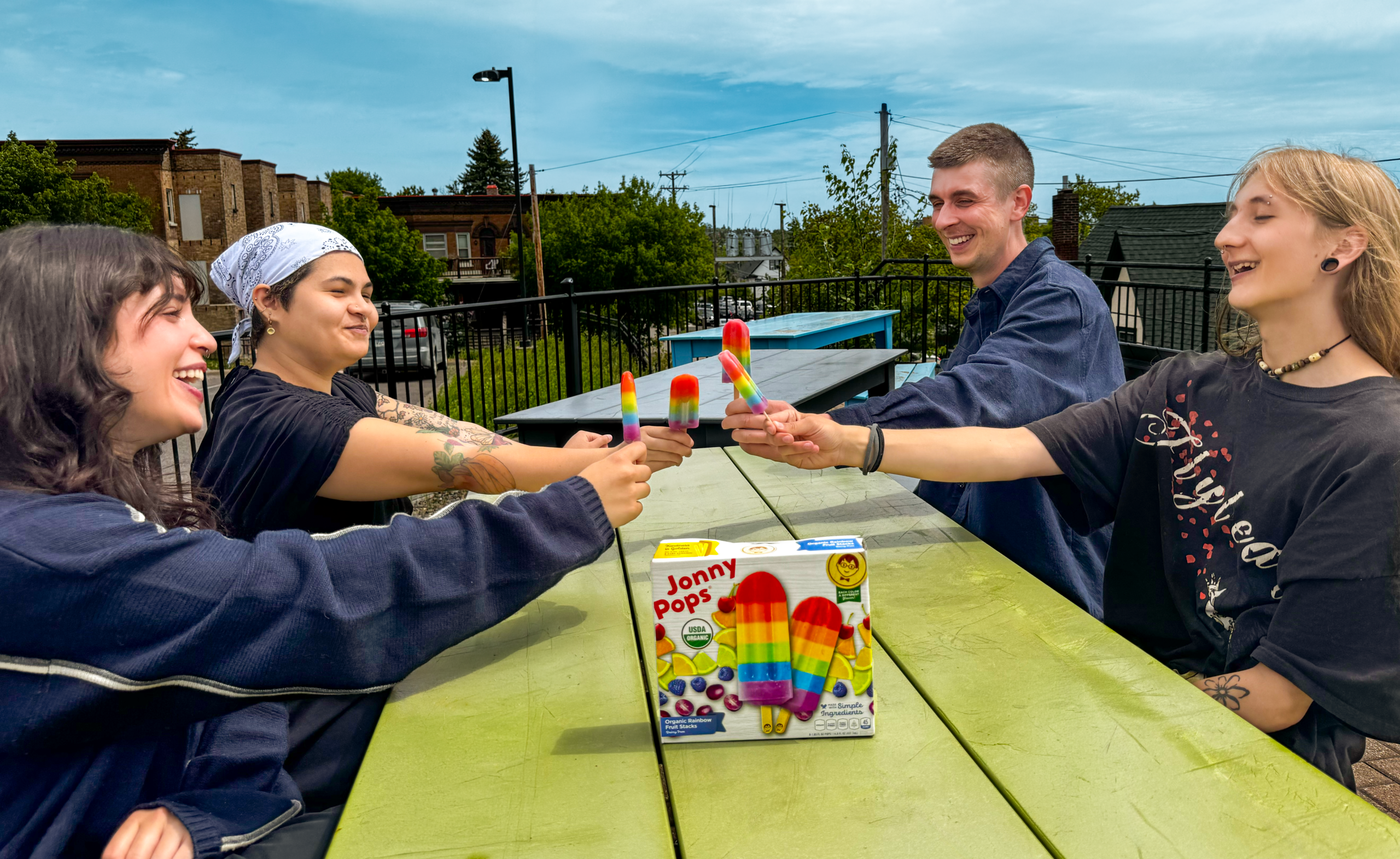


JonnyPops stands out in a crowded freezer aisle because of its simple, clear mission: kindness. The Minnesota company carries out their mission in a myriad of ways—from a commitment to no artificial dyes, to their sticks, which have a kind deed printed on every one, as well as through their commitment to giving back to the community.
The idea for the natural popsicle company originally came from Jonathan “Jonny” Jeffrey, a cousin of a St. Olaf College student, Erik Brust. In 2010, Jonny passed away, but Erik decided to carry his idea forward. In 2011, he formed a business with fellow students focused on making delicious popsicles with local ingredients whenever possible.
“The more homes we reach, the more kind deeds are shared.”
Michael Meriggioli, Associate Manager of Customer Marketing, JonnyPops
As the company grew, JonnyPops expanded production and eventually made its way into grocery stores across the United States, though it continues to produce its frozen treats in Elk River, MN. “Minnesota is a state that prides itself on showing up, being dependable, and taking care of your neighbors,” said Michael Meriggioli, JonnyPops’ Associate Manager of Customer Marketing. “That is aligned with how we operate. We are built around real relationships with retail partners, community engagement, and products made with simple ingredients.”
While many companies talk about their values, JonnyPops brings kindness into everyday life. Each pop stick includes a simple “kind deed,” encouraging small, meaningful moments. And, through its “Kindness is Golden” program, people can complete the kind deeds, collect their popsicle sticks, and trade them in for rewards. This transforms a frozen treat into an experience, encouraging positive action.
This focus on kindness extends beyond their popsicle sticks. JonnyPops has developed programs for schools and communities, giving students simple ways to practice kindness both in and out of the classroom. “When schools need support, we don’t just ship product,” said Michael. “We send Kindness Toolkits with posters and stickers so educators can bring the mission into their classrooms.”
JonnyPops continues to grow while staying connected to its purpose. And reaching more homes means sharing their message with more people. As Michael put it, “The more homes we reach, the more kind deeds are shared.”
Look for a variety of JonnyPops frozen treats at both Whole Foods Co-op stores. Learn more about JonnyPops at jonnypops.com.
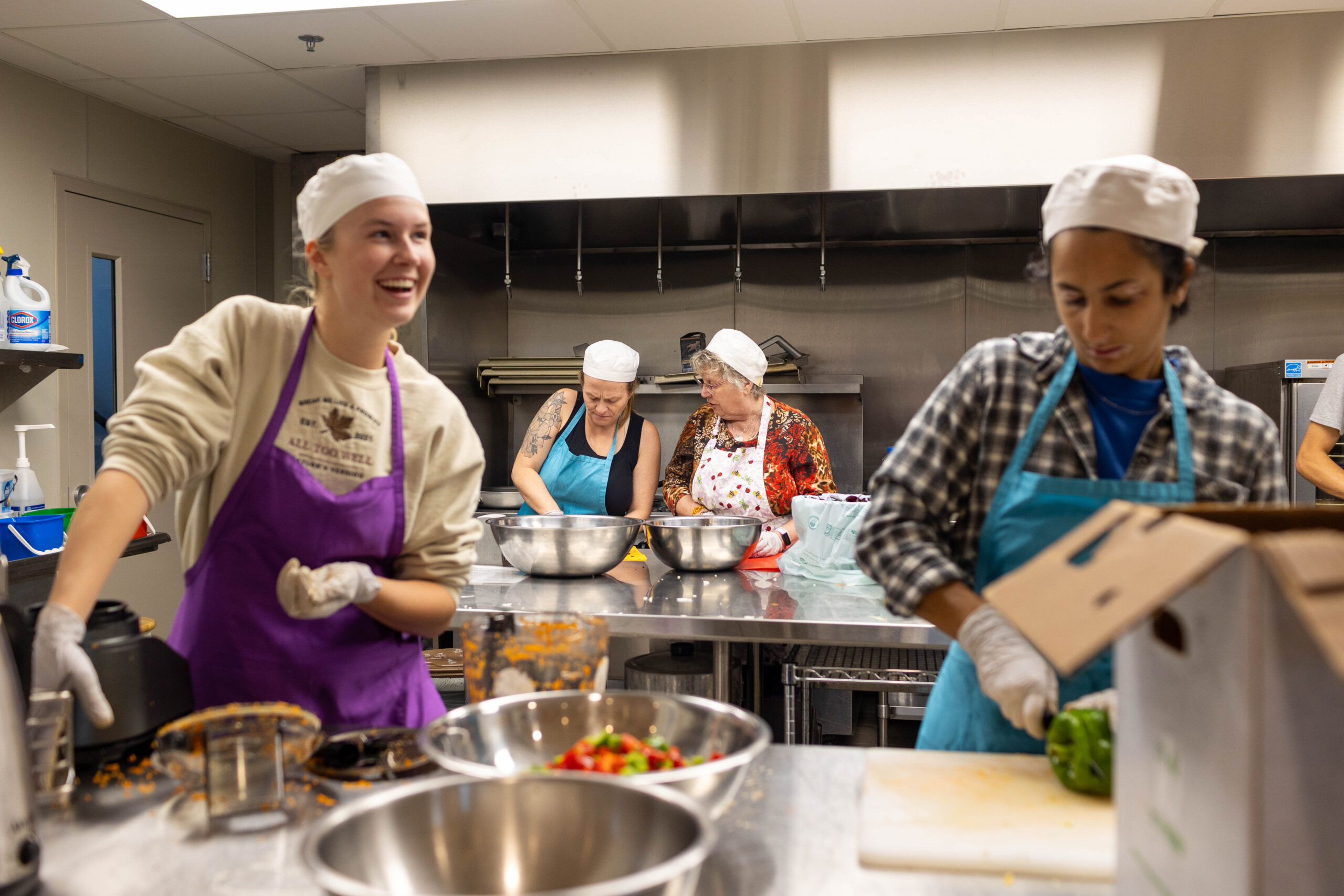
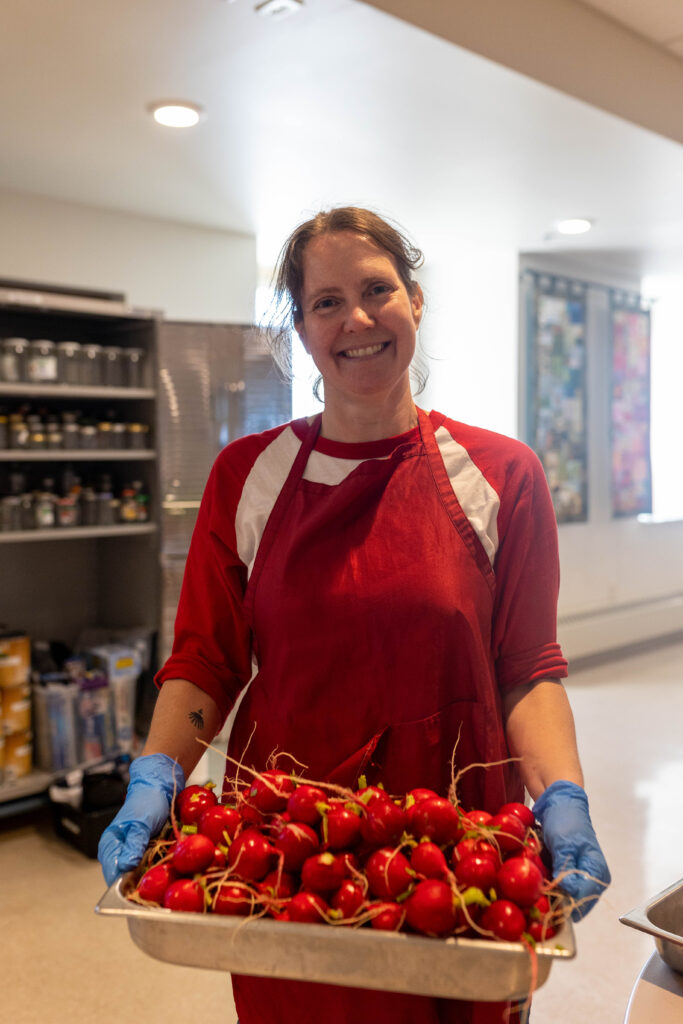
It was 8:30 am on a Monday, and a group of women were gathered over a dozen cans of diced tomatoes, two gigantic pots and a calculator, figuring out portions. As the women bantered, everyone’s eyes started watering from the whirling automatic onion dicer. As the UMD medical student tossed another onion into the machine, everyone good-humoredly razzed her. Wearing the coveted onion goggles, she unapologetically smiled and shrugged.
The morning had started just 15 minutes earlier with a quick meeting. The diverse group of about 20 volunteers and employees had come together to prepare the week’s meal kits for Nourish, a hyper-local meal delivery program for people living in and near the Duluth Hillside, one of several programs run by the Duluth Center for Women and Children.
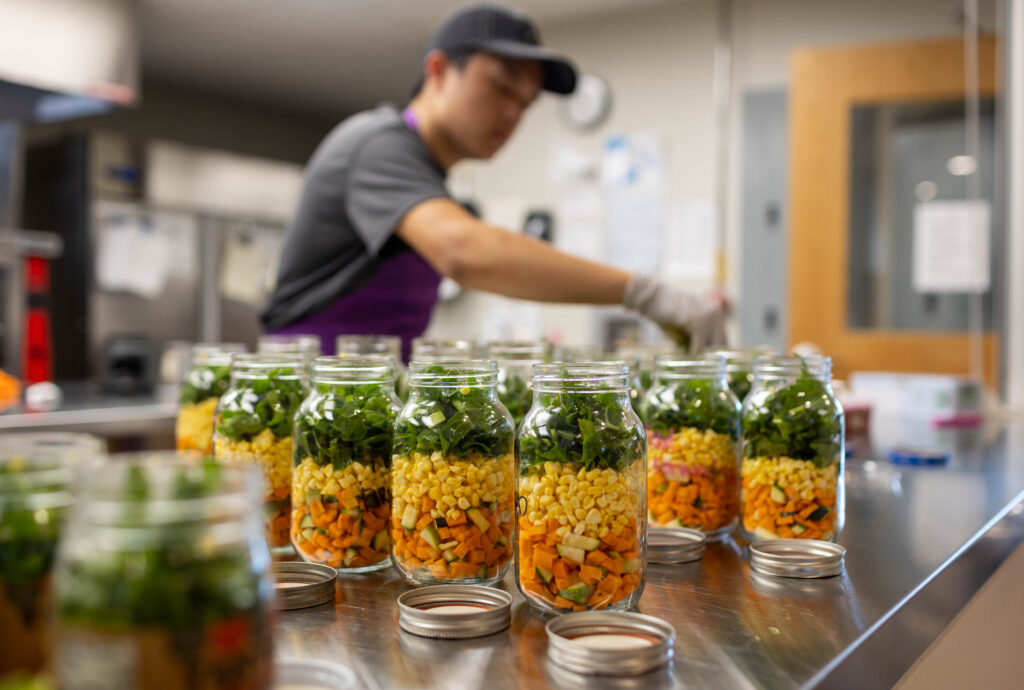
Nourish Meal Kit ingredients are prepared. Photo by Molly Suzanne Creative
Every Monday, subscribers to the Nourish program receive a box prepared that morning, filled with fresh ingredients and sauces, and a recipe, to make a meal in 30 minutes or less. Half the participants pay for their weekly box. The other half, who have an identified need, receive theirs for free.
Aparna Katre, organizer for the Duluth Center for Women and Children and Interdisciplinary Studies Program Director at University of Minnesota Duluth, welcomed everyone and kicked off the day’s project.
“Today’s recipe is for jambalaya. We need 164 servings, 69 for kids,” she said before pointing out the ingredients for the regular and vegetarian recipes. Then people dispersed to wash, measure, cut and cook ingredients.
The idea for Nourish, a sort of grassroots Hello Fresh, was born from an evidence-based approach out of UMD, where professors sought to make an impact on the Central Hillside through implementing social entrepreneurship. Dr. Molly Harney was working with a group of women around trauma and parenting who were primarily living in the Steve O’Neil Apartments. “During that process, she realized that women are isolated and disconnected,” Aparna explained. “They need meaning and purpose. So, she had an idea to create a social enterprise.”
The group, First Ladies of the Hillside, was formed with the tagline “Invisible No More” focused on giving purpose – and visibility – to women living on the Central Hillside who were feeling overlooked. The group later became The Duluth Center for Women and Children.
To create a social enterprise, first the group needed to identify a need that they could fill. That’s when they connected with Aparna. “I was teaching an entrepreneurship class here at UMD,” she explained. “I got students and the women together in a class for a semester and we did exploration. We didn’t want to just do more of what is being done but [instead] find a gap that existed in the Central Hillside that we could fill.”
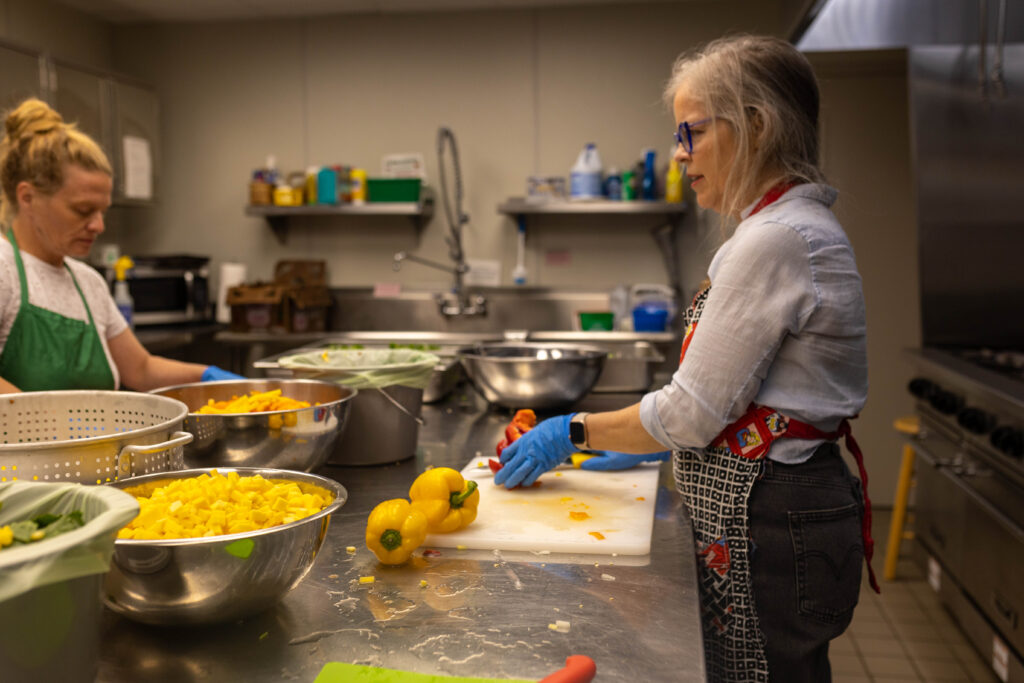
Photo by Molly Suzanne Creative
The group identified food security, both access to whole fresh foods, as well as the skills and confidence to cook these foods, as a need they could meet and the idea for the meal kits was born. “It made sense for the community,” Aparna said. “The meal kits could help households, over time, to transition to more healthy eating behaviors.”
The meal kits provide free fresh meals, including partially prepared components as well as some ingredients that still need to be cooked. A recipe is included, both to provide instructions on how to cook the remaining ingredients, as well as how to pull the entire meal together. This approach helps to build familiarity with specific ingredients that may not be familiar to everyone while building confidence in the kitchen, through practice.
Photo by Molly Suzanne Creative
UMD students worked with Aparna to collect information and data from the program participants to understand which parts of the program were working – and which parts weren’t.
They sought to answer the questions: Are the people receiving the meal kits actually eating the meals? Are they throwing out some food? How happy are they? “As we introduce new tastes and new, healthier foods, we had to meet meal kit recipients where they were on in their food journey,” Aparna said. “As we began to introduce newer foods, we looked at whether they were actually accepting those foods or not.” The team was then able to implement their findings in real time, adjusting the program to continue to better fit the needs of the community they were working with.
The nonprofit’s partnership with UMD and work with students has added the capacity to gather valuable insights. But it has also created tangible, real-life learning opportunities for students.
In addition, the program has brought important employment opportunities to a population that has fallen out of the workforce.
Staying true to the program’s original intent of engaging women on the Central Hillside who are looking to improve their lives and their community, the program provides an opportunity for people experiencing mental health issues or other life circumstances to engage in a trauma-informed work environment.
By creating a flexible and compassionate employment model, they’ve helped to get women back on their feet. “We have had some employees move on to other things,” Aparna explained. “They are now in full-time positions in other places.”
“Here, you feel like a mission is being accomplished… when you leave, you leave feeling full.”
DCWC Staff Member
Back in the kitchen, another benefit of the Nourish program is palpable.
At one table, a young woman meets a middle-aged woman, who together scoop and bag servings of rice. In the kitchen, a half-dozen college students chop a mountain of peppers. Two veteran volunteers wash the reusable glass jars that will soon be filled with all the diced vegetables. Meanwhile, calculations complete, the staff have moved on from the cans of tomatoes to cook at the stoves and coordinate all the moving pieces that will culminate in a box filled with reusable jars of diced vegetables, a jar of jambalaya base, a bag of uncooked rice, and some trail mix (a snack for the kids). The food will all then be personally delivered to the doorsteps of homes in neighborhoods in and around the Hillside.
Photo by Molly Suzanne Creative
In every corner, there’s laughter and joy in doing good work for neighbors with neighbors. Person after person, when asked why they come back, share the sense of community they feel when working together.
“Here, you feel like a mission is being accomplished,” commented one of the staff. “When you leave, you leave feeling full.”
If you’re looking to get involved through donating, volunteering, or subscribing to a Nourish meal kit, visit dcwcnourish.com.
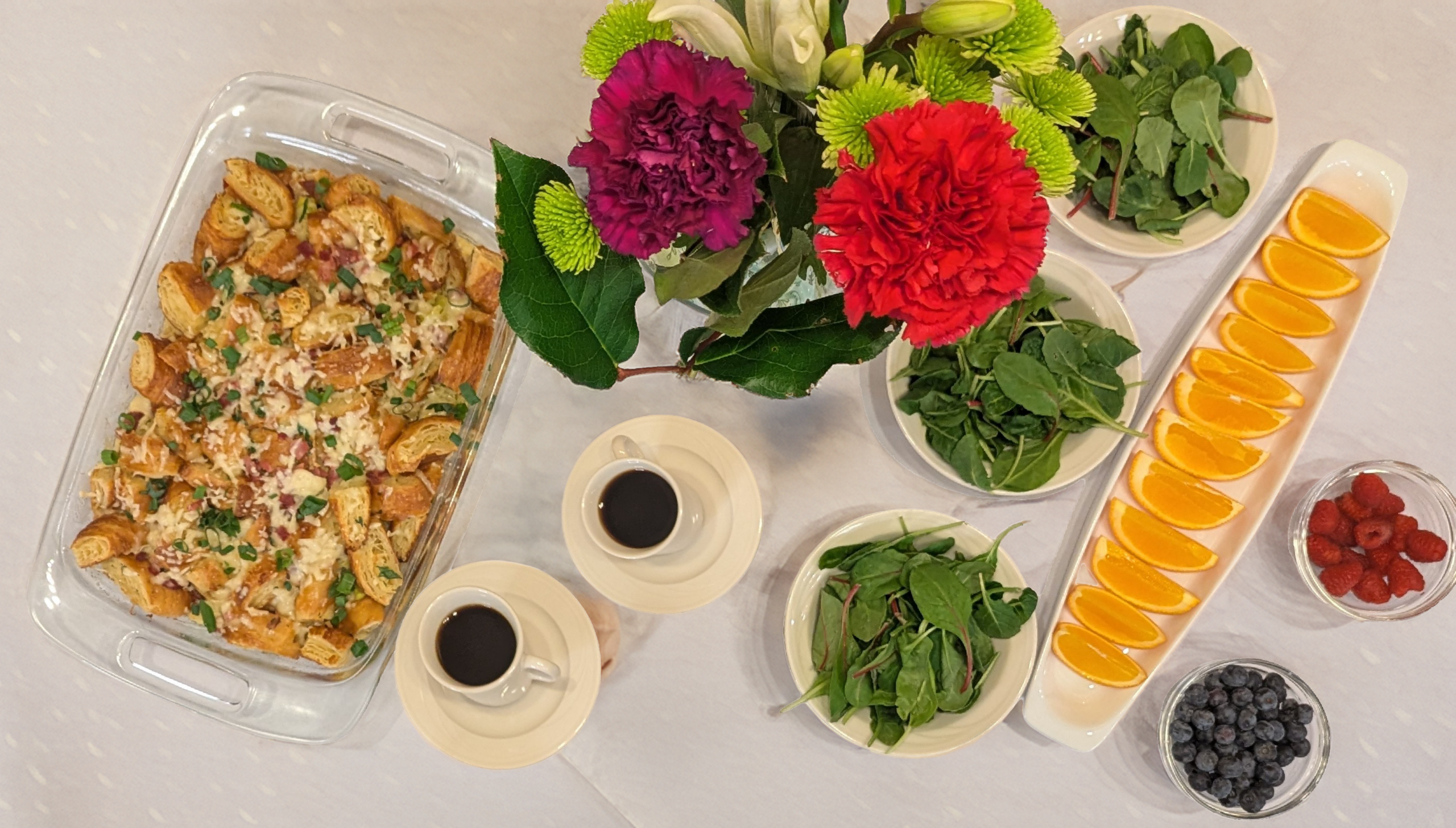
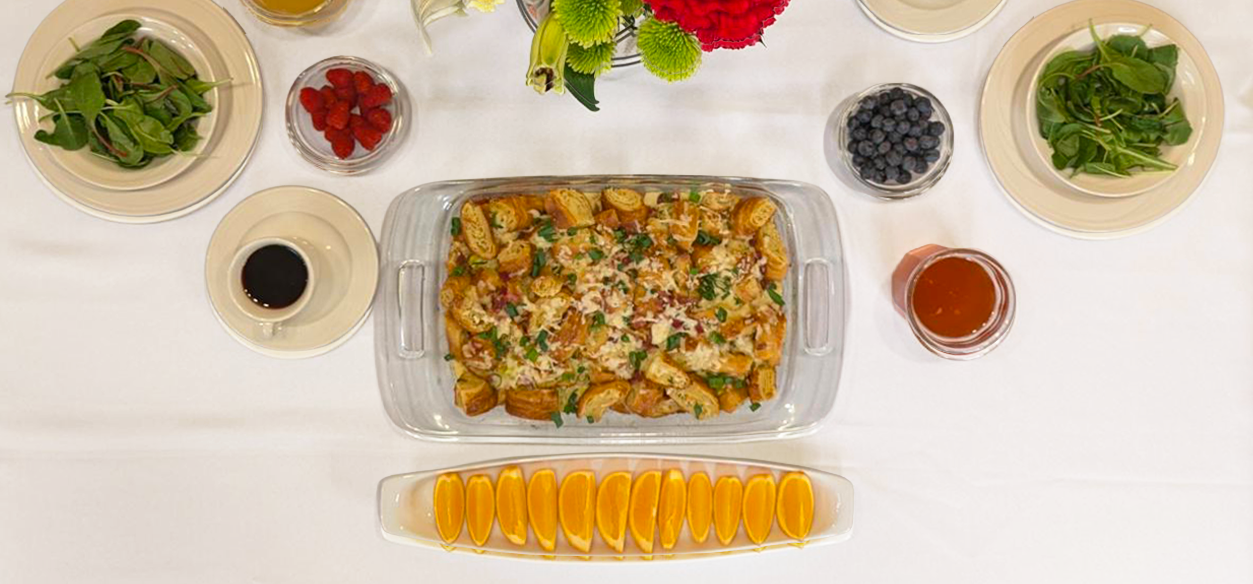
Walk down any aisle at Whole Foods Co-op, and you’ll find local foods to fill your shopping cart. Whether you’re looking for one all-star ingredient or to fill your table with local options, it’s easy to support regional farmers and food producers when you shop the Co-op. In our brunch recipe, you’ll find many products grown or made here in Minnesota or Wisconsin. But don’t stop there! Remember to round out your brunch with a locally roasted coffee and decorate your table with fresh local flowers.
Meet the Makers
Learn a bit about the local producers featured in our Co-op Croissant Bake recipe! Click the logo to visit the producer’s website.
Deer Creek
Created by master cheese maker Chris Gentine, Deer Creek has become known for its award‑winning, artisanal cheeses.
Duluth’s Best Bread
This family‑owned bakery has been rolling in the yeast since 2015. In addition to supplying to the Co-op, they have three locations in the Twin Ports!
Locally Laid Egg Company
Locally Laid’s hens are pasture-raised and have lots of outside space to exercise. By sourcing and selling locally, Locally Laid champions mid-sized farms and strengthening rural communities.
Food Farm
Food Farm has been part of the Co‑op’s story for decades. The Fisher‑Merritt family, spanning multiple generations, grows organic vegetables that are available at the Co-op and through CSA shares.
Johnston’s Riverview Farm
The farm is a family‑run operation that still delivers milk in reusable glass bottles and focuses on sustainable principles like reusable packaging, pasture‑based and regenerative grazing, and more.
Westby Creamery
Farmer‑owned since 1903, Westby Cooperative Creamery represents about 100 farm families working together to support healthy animals, a healthy planet, and delicious dairy.
Y-ker Acres
The Stamper family raises truly happy pigs; the animals spend their days outdoors year‑round, exploring and rooting, supported with non‑GMO supplemental feed.
Course: Whole Foods Co-opDifficulty: Intermediate / Moderate / Average
Prep time
30
minutes
Baking time
45
minutes
Resting time
10
minutes
Make a delicious croissant bake featuring local ingredients, perfect for weekend brunch.
Ingredients
6-8 Duluth’s Best Bread croissants, preferable one-day-old and cut into four pieces
⅛ cup salted Westby butter
1 cup thinly sliced leeks
1 cup finely chopped Food Farm shallots
1-2 garlic cloves, minced
3 large Locally Laid eggs
1 Tbsp. Dijon mustard
1 cup heavy whipping cream
1 ¼ cups Johnston’s Riverview Farm milk
1 Tbsp. each chopped thyme leaves and chives
¾ cup Y-ker Acres ham, cut into bite-size pieces
1 cup grated Deer Creek Vat17 World Cheddar
Directions
Preheat the oven to 350°F and grease a medium casserole dish.
Dry the croissant pieces overnight or lightly toast them until crisp on the edges.
Melt the butter in a skillet over medium heat, then cook the garlic, leeks, and onions for about 5 minutes, or until soft.
In a large bowl, whisk together the eggs, Dijon mustard, cream, milk, and chives. Add half of the croissant pieces and let them soak for a minute.
Spread half of the leek–onion mixture in the casserole dish, then add the soaked croissants.
Scatter the ham evenly over the top and add half of the cheese.
Soak the remaining croissant pieces in the egg mixture, place them on top, sprinkle with the remaining cheese, and pour any leftover mixture over the top.
Cover with greased foil and bake for 30–35 minutes. Uncover and bake an additional 10–15 minutes until puffed and golden.
In 2000, Second Harvest Northland received a call from Jean Gornick, the Executive Director of the Damiano Center. At the time, nonprofits with on-site meal programs, like the Damiano Center, would individually reach out to different grocery stores in the area to see if they had any surplus food that was still good to eat, but not sellable. Inversely, grocery stores would have to reach out to multiple nonprofits when they had a surplus. But Jean had a vision for a more efficient approach: a cohesive food rescue program.
“The food rescue program has been instrumental in our growth, and ability to feed more neighbors. A lot of the comments we hear is just the appreciation for fresh food.”
Shaye Morris, Second Harvest Northland
“She thought that Second Harvest Northland could be a kind of collector/gatherer,” explained Shaye Moris, President/CEO of Second Harvest Northland. “It directly aligned with our work serving as our region’s only food bank.” In 2003, Second Harvest Northland launched a new food rescue program that collected surplus food from grocery stores, restaurants, schools and the medical community and distributed it to their network of on-site meal programs across the Twin Ports.
Shaye Moris, President/CEO of Second Harvest Northland.
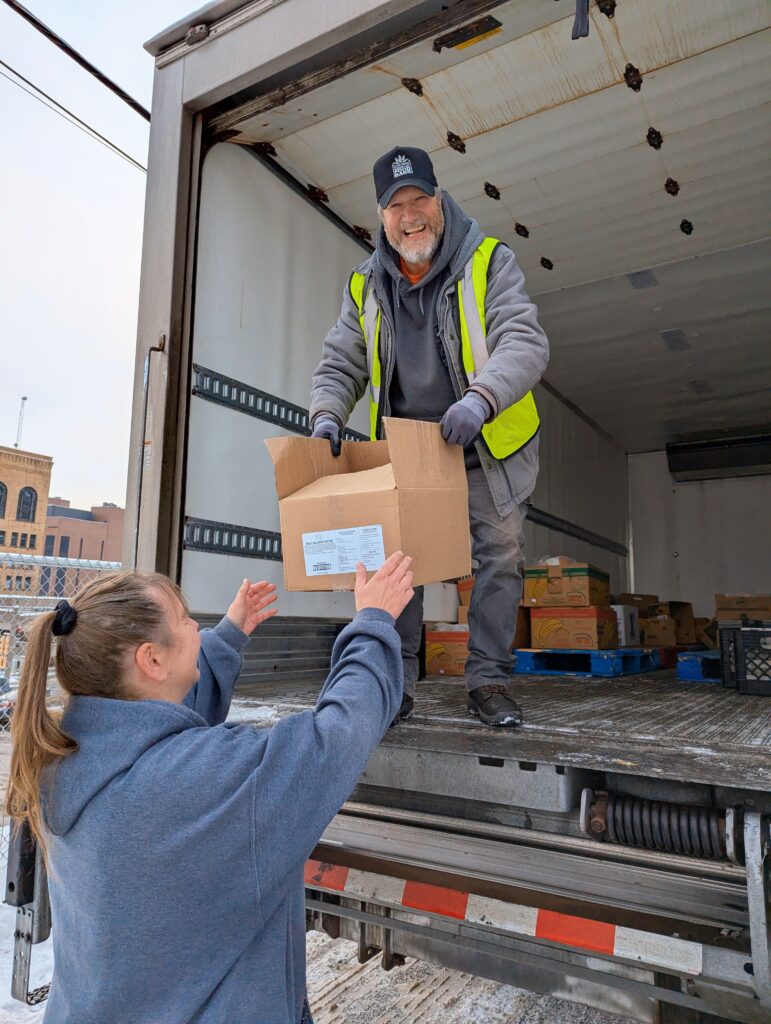
Soon after, Whole Foods Co-op joined the route. Over twenty years later, the Second Harvest Northland truck pulls up to both the Hillside and Denfeld stores twice a week, loading up on fresh fruits, vegetables, dairy, meat and baked goods, before heading to programs such as the Damiano Center, Chum, the Boys & Girls Clubs of the Northland, and the Salvation Army, where the food is distributed immediately to community members.
These deliveries are just a portion of the work the regional food bank Second Harvest Northland does. Food banks, like Second Harvest Northland, are aggregation centers, gathering and then distributing food throughout the region. Second Harvest Northland covers 15 counties in Northeastern Minnesota and Northwestern Wisconsin, partnering with food shelves, on-site meal programs, and tribal organizations to support families, children and seniors.
The facility distributes almost 13 million pounds of product every year, which is about 11 million meals, and the food rescue program has played a growing role in the food mix that the food bank distributes every year.
“Large food manufacturing has become very tech savvy. It used to be, back in the late 90’s, that we’d see a lot of manufactured items like canned goods and boxed products,” said Shaye. “But with technology changing, there’s a lot less surplus in the marketplace. So, we have set our sights on regional food rescue, which now makes up the biggest percentage of any other source of food for our region.”
In fact, food rescue from local donors like Whole Foods Co-op makes up more than 40% of the food that Second Harvest Northland accesses and distributes.
Every weekday, Second Harvest Northland’s trucks cover a different route, stopping at between 12-15 locations, both picking up from businesses and dropping off at nonprofits.
To better understand the journey the fresh food takes after leaving Whole Foods Co-op, we followed one truck for a couple of stops. On this particular morning, the team loaded up from the Hillside location.
Mark, who’s been a driver for Second Harvest Northland for almost 15 years, greeted us with a smile and explained his process of providing an extra layer of quality control and weighing and recording the product. He then sets aside certain product in his truck that he anticipates the different nonprofits on his route will want. Then, we headed over to Chum.
Mark, a driver for Second Harvest Northland, unloads a box of food to Julie at Center City Housing.
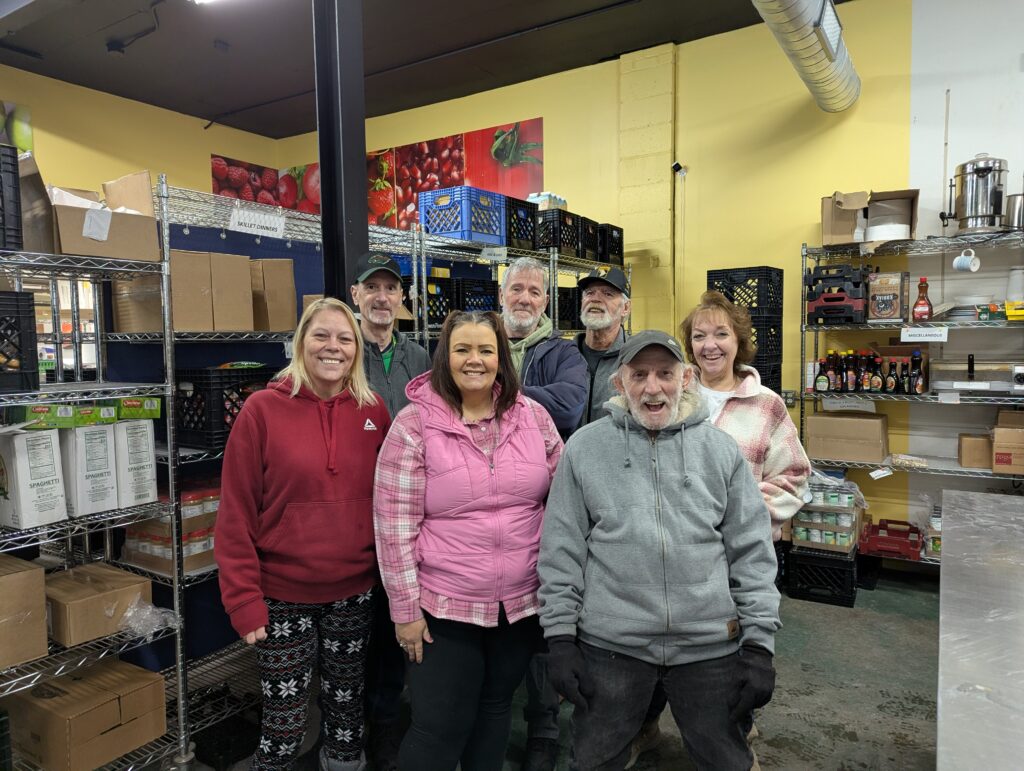
April (center, front) and other Chum employees and volunteers, ready to unload product.
At Chum, we were met by a group of employees and volunteers excited to help unload the product. The food is organized and then distributed throughout the week, both at Chum’s food shelf on the Hillside, as well as through pop-up locations throughout the community.
“Whether they’re a family of one to a family of ten,” said April, Chum’s Director of Distributive Services of the services they provide, “we want to make sure that their needs are met and that we can do the best we can to make them feel comfortable.”
The donations from the food rescue program help to complement these efforts, allowing more people to have more access to fresh foods.
We then drove to Center City Housing, which provides access to affordable, quality housing and stability for those suffering from chronic chemical dependency, among other services. We caught up with Julie, who accepted food that would become lunches for people in the detox center, as well as support their 30 tenants and other neighborhood programs.
Julie’s proud of the work she does and its community impact, fueled in part by the food rescue donations. “It’s benefited a lot of people. A lot of homeless people and people down on their luck. That is really what matters.”
“We couldn’t do our work without partners like Whole Foods Co-op,” mentioned Shaye. But Second Harvest Northland’s food rescue program also couldn’t happen without community support. While the food for the food rescue program is donated, Second Harvest Northland provides the transportation and labor to make this program a success, and donations support this critical infrastructure. To learn more about Second Harvest Northland and to support their efforts, go to secondharvestnorthland.org.
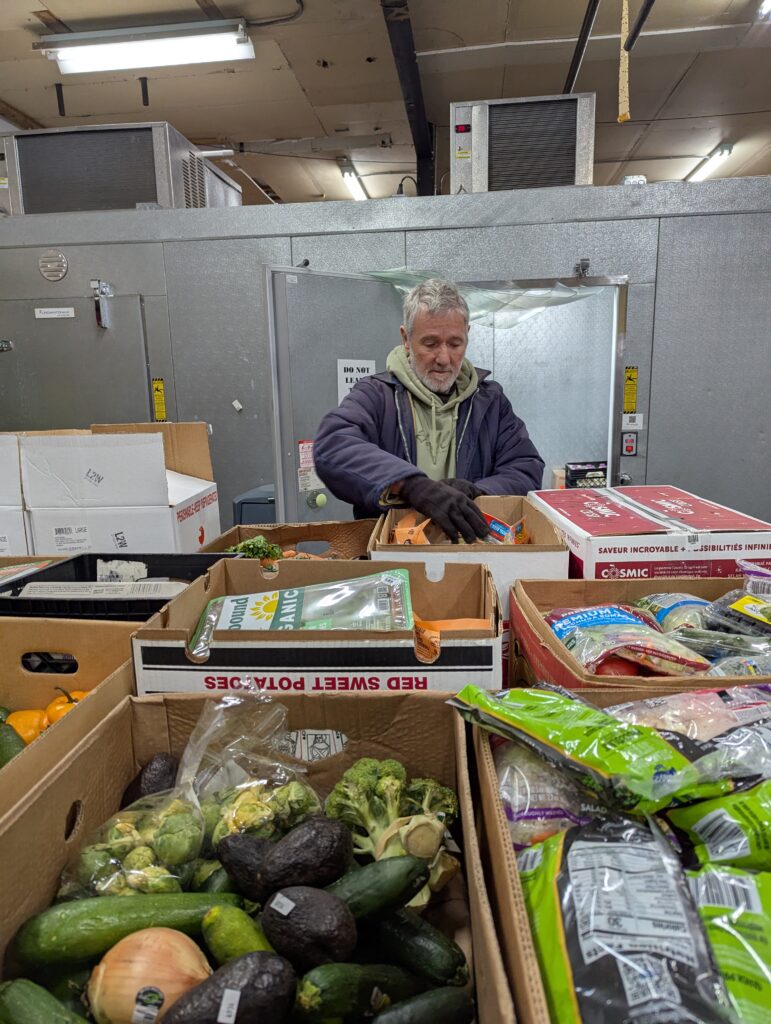
Donated food is unpacked and organized. The food will be distributed at pop-ups around the community, and at Chum’s Hillside food shelf.
How Whole Foods Co-Op Denfeld Became A Community Staple
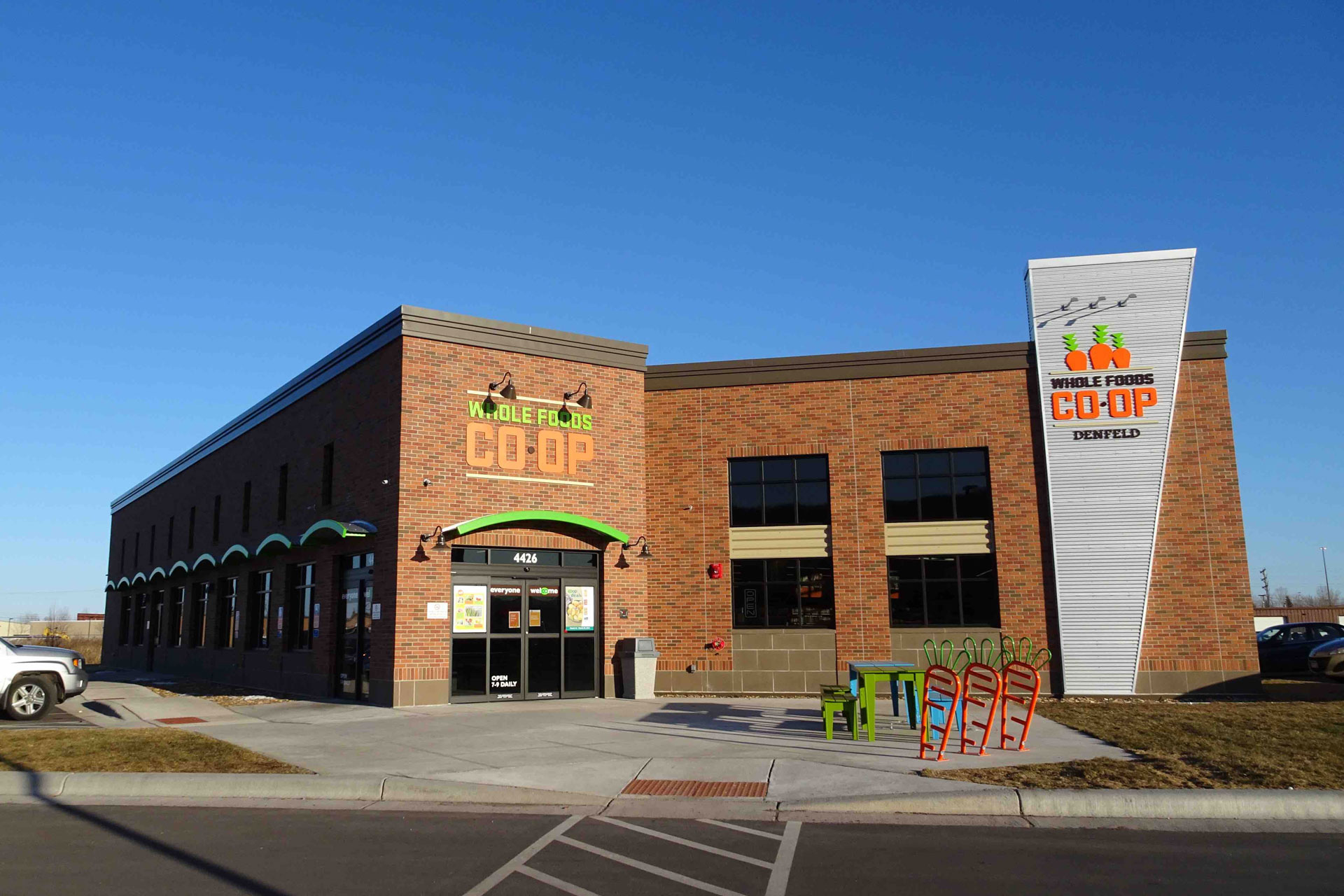
Denfeld’s Brewer Ridge Overlook serves as a community gathering space.
In the early 2010s, Whole Foods Co-op began planning an expansion in Duluth, aiming to increase access to nutritious and local food and strengthen the resilience of the regional food system.
Co-op leadership, including then-General Manager Sharon Murphy, recognized an opportunity to extend the cooperative model into a new area, including growing neighborhoods that had limited access to traditional grocery stores.
The intention to expand was announced in the Duluth News Tribune in July 2013, and the community responded enthusiastically. In the 2013 Annual Report, Sharon noted that she received requests to add a store in neighborhoods across the region. She even fielded several “cheerful requests to put it ‘by my house.’” The voices of the community were heard, and market assessment studies were conducted for several locations.
Various sites were considered, guided by concrete factors such as market reach, traffic patterns, building and parking capacity, and impact on the existing store, but also by cooperative values and principles. At that time, a vacant lot in the Denfeld neighborhood stood out as a good opportunity due to the area’s limited options for groceries and the in-process redevelopment of Grand Avenue. Eventually, the board approved the selection of the second store’s location, right across the street from Denfeld High School.
Building a new store is a costly endeavor. In 2013, the Board of Directors called upon the 7,500 Whole Foods Co-op Owners, who responded in a truly cooperative fashion. Owners provided over $1.5 million in capital loans to the Co-op for the expansion, which accounted for about 20% of the total project development cost. Josephine, the current Finance Manager, processed the first Owner loan in 2013, and was present when the last of the Owners were repaid in 2023. Josephine shared, “Our Owners and staff believed in the project, but no one knew exactly how the journey would end. I got a rare opportunity to be here to see it through all the way to the last loan repayment. It was an awesome experience to be part of this chapter in Denfeld’s story.”
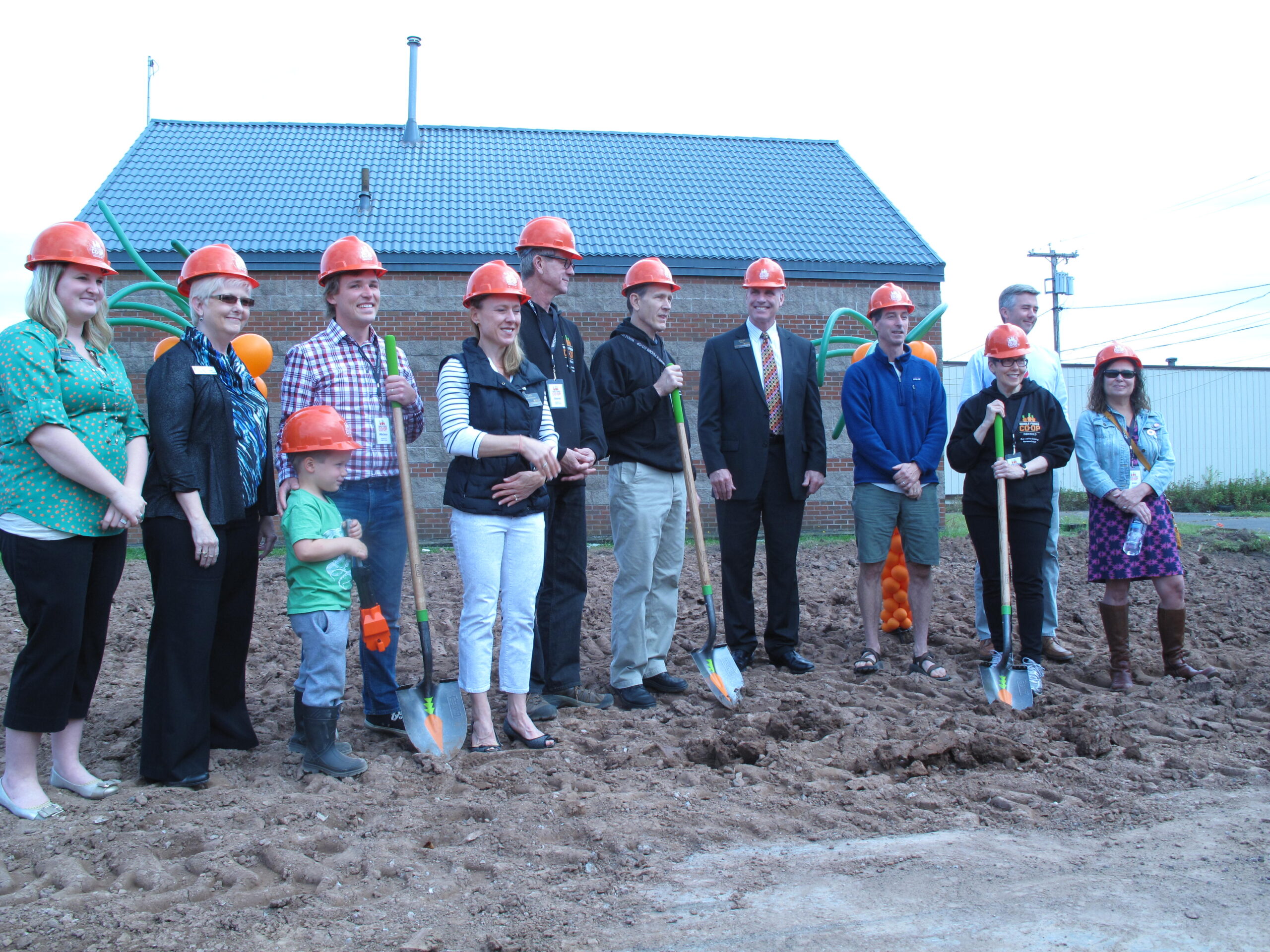
Groundbreaking at the Denfeld store in September 2014.
Construction begins in June of 2015.
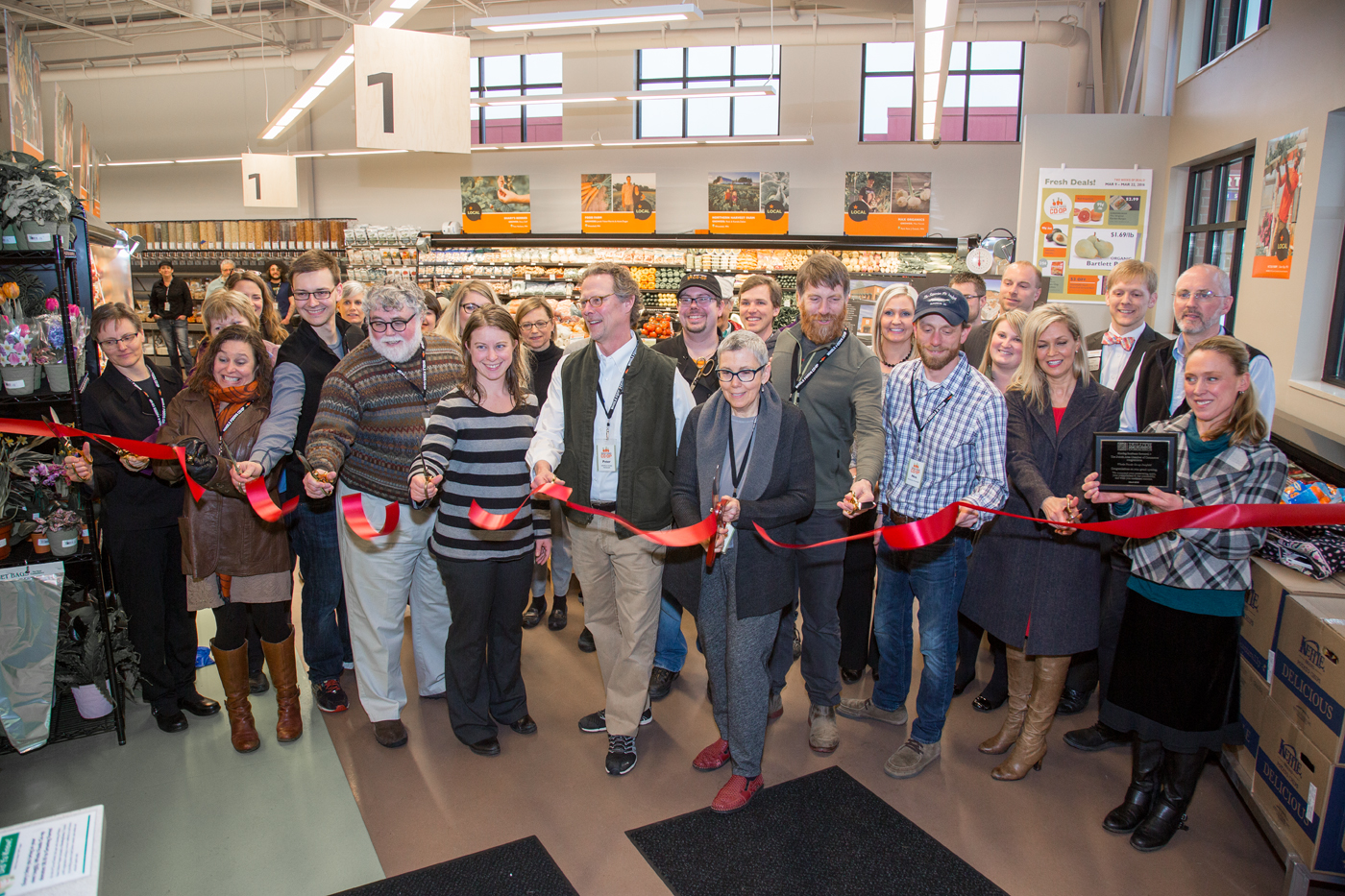
Ribbon cutting event at Denfeld in 2016.
With the final hiring completed, the Denfeld store was ready to open in March 2016. After initial excitement, the store met some growing pains, missing its original sales projections. However, the staff pivoted as it learned more about the needs of its new neighbors. Erika, the current store manager, shared, “As we learned what our shoppers were seeking out, we found that there was more of a demand for conventional offerings. We continue to try to meet the needs of all our customers by presenting the selection, pricing, and qualities that they are looking for.”
The Denfeld business grew slowly and steadily. But then the pandemic changed people’s shopping patterns, to the benefit of the Co-op’s second store.
“The pandemic was a turning point for Denfeld because people were looking for ways to shop at the Co-op while having more space and fewer crowds,” Sarah Hannigan, current Whole Foods Co-op General Manager explained. “It introduced people to the new store, and then people kept coming after that.” Since the pandemic, Denfeld’s contribution to Whole Foods Co-op’s consolidated sales has grown from about 25% to over 40%.

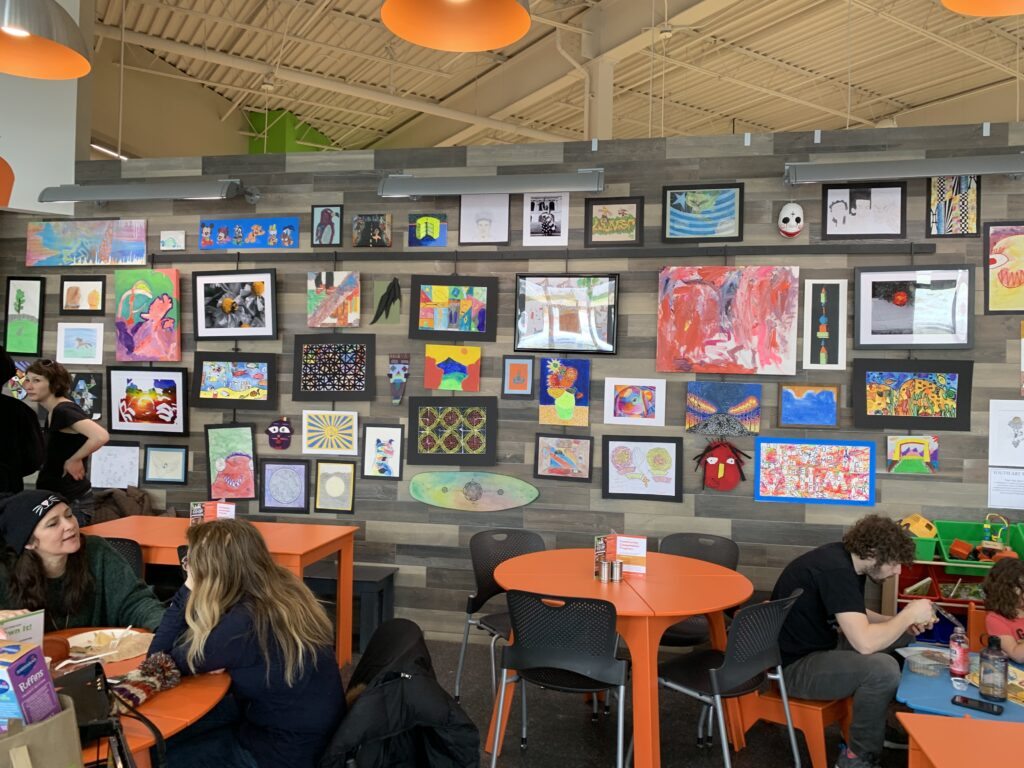
Art wall at Denfeld.
Whole Foods Co-op is grateful for how the Denfeld store expanded its ability to serve a wider community, both making it easier for people living in the neighborhood, Superior and surrounding area to access its offerings, but also for the positive impact the Co-op continues to have on the Denfeld neighborhood.
Whole Foods Co-op is involved in the West Duluth Business Club and is a regular at Spirit Valley Days. The Co-op is also proud to support the nonprofits in neighborhoods surrounding the store, including Northern Expressions Arts Collective, the Boys & Girls Clubs of the Northland, Ecolibrium3, and many others.
As Denfeld looks to the future, the focus remains on deepening its impact. As the store grows into its potential sales volume, it is poised to provide greater market access for local farmers and food producers, as well as deeper partnerships with community groups. This impact on the community wouldn’t be possible without your ongoing support. Thank you for shopping at Whole Foods Co-op and supporting the Denfeld location. Here’s to another great 10 years – and beyond!
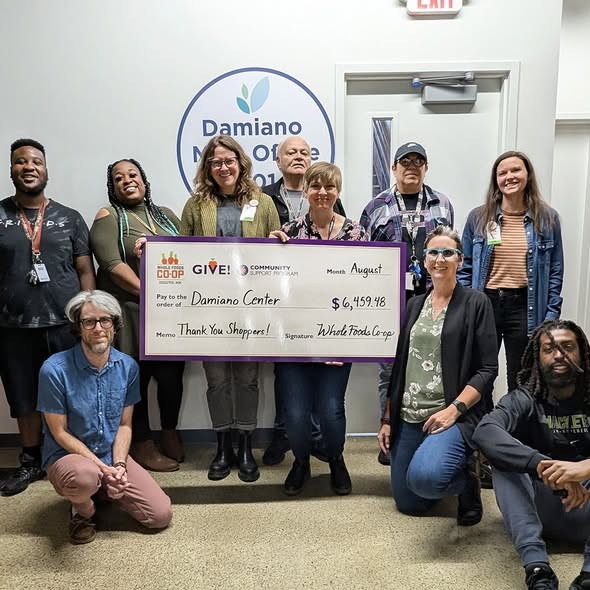
Since 2017, our cashiers have asked a simple question thousands of times: “Would you like to round up today?” And time after time, our shoppers and Owners have responded with a resounding yes. Pennies, nickels, and dimes—tiny acts of generosity—have added up to something truly remarkable: Whole Foods Co-op shoppers have donated over $1 million through the GIVE! Round-up program.
And one million dollars in small change is making big change.
Give! round-up check presentation to the Damiano Center.
Strengthening the Community
More than 50 nonprofits across our region have felt the impact of our shoppers’ kindness. About $650,000 of the donations have gone to our Community Support Program, directly supporting organizations working every day to make our community stronger, safer, more inclusive, and more resilient.
Round up donations have:
Supported food access through partners like Chum, Damiano Center, and Duluth Farm to School
Provided vital services for vulnerable neighbors through PAVSA, CASDA, and First Witness
Uplifted diversity and inclusion with Family Freedom Center, AICHO, and the Clayton Jackson McGhie Memorial
Helped steward our natural environment with St. Louis River Alliance, Hartley Nature Center, and Friends of Sax-Zim Bog
And there are dozens of additional nonprofits that have benefited from the kindness of our shoppers. And every single one of these nonprofits is making a positive impact on the populations they serve.
Strengthening the Local Food System
In 2021, Whole Foods Co-op expanded the impact of GIVE! by launching the Grow Local Food Fund (GLFF), a grant program designed to strengthen our regional food system. Most months, round-up donations are split equally between the featured nonprofit and the GLFF.
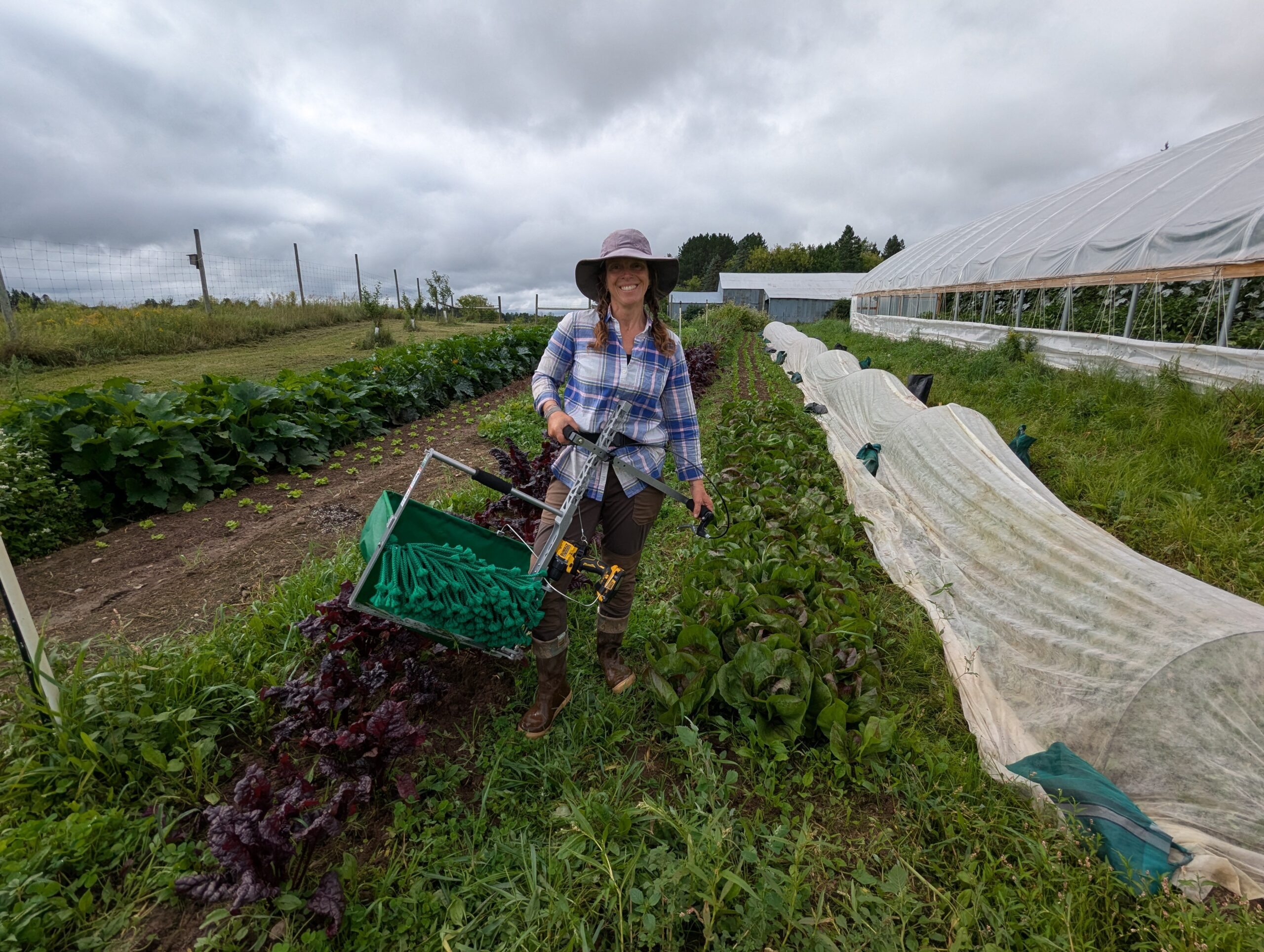
To date, the GLFF has supported 34 projects, helping farmers and food producers repair barns, build fences, invest in equipment, and grow their capacity to feed our region.
“I love the program,” said Heather-Marie of Rising Phoenix Community Farm, a 2025 grant recipient. “It’s such a great way to have direct impact on many organizations and for people to connect with farmers and growers in the area.”
Another 2025 GLFF recipient, Julie Allen from Sörestad Farm, shared, “[The Grow Local Food Fund] is such a beautiful way for dollars to stay in our community, for eaters to help producers, and to uplift our local food system.”
Heather-Marie of Rising Phoenix Community Farm with her new harvesting tool, purchased with grant funds from the Grow Local Food Fund.
Strengthening Food Accessibility for Owners
Your donations have also supported Whole Foods Co-op programs that reduce barriers to food access, including the Fran Skinner Memorial Matching Fund and the Access Discount Program. These initiatives help ensure that high-quality, local food is accessible to more people in our community.
Our Sincerest Gratitude
This $1 million milestone wouldn’t be possible without individuals choosing to round up.
“I’d like to thank our Owners and shoppers for their incredible demonstration of generosity day after day, year after year, as well as our staff for their commitment to this program,” said Sarah Hannigan, Whole Foods Co-op General Manager.
“The outpouring of support from our community for our community is truly inspirational and humbling,” said Hannigan. “We’re proud to administer the GIVE! program at Whole Foods Co-op and are looking forward to seeing its impact in the years to come.”
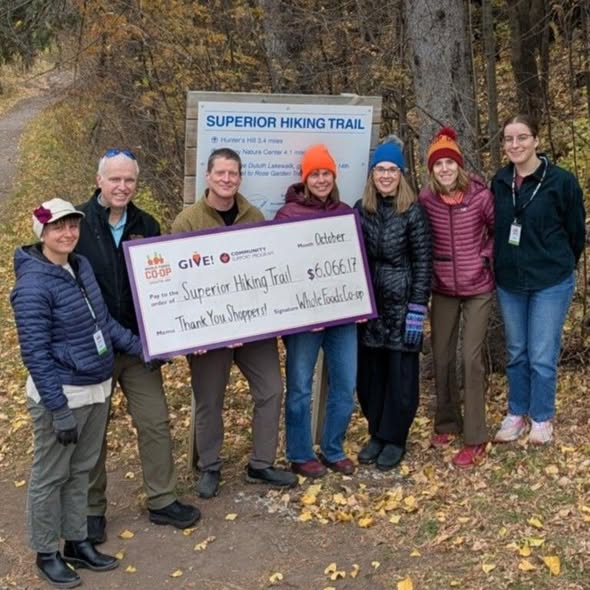
GIVE! check presentation to the Superior Hiking Trail.
Thank you for rounding up. Thank you for believing that small change can make a big difference.
And thank you for helping us build a stronger, more connected, more compassionate community. One little round-up at a time.
Business Community Adds Warmth, Support for Local Hot Cocoa
Is there anything more nostalgic than a steaming mug of hot cocoa? Just one whiff and you are immediately transported back to childhood and wintry days filled with sledding, snow forts, rosy cheeks and chilly toes. Warming up with hot cocoa was a necessity after spending the day playing outside.
Dean Packingham and Amanda Cunningham of Mike and Jen’s Hot Cocoa Mix.
This was the case, and the moment of inspiration for Dean Packingham, creator of Mike and Jen’s Cocoa Mix. His daughter Jen had been playing outside their Duluth home. Upon entering the house, she asked her dad for some cocoa. Dean obliged, but while reading the ingredients on the label was dismayed to realize many of the ingredients were unpronounceable chemicals. Thinking back to his own childhood, Dean remembered his mom making a cocoa mix kept in a Tupperware container and knew he could do the same for his own kids using all-natural, quality ingredients. This revelation soon became a quest to make the most awesome hot cocoa mix ever, one that was water based yet still rich and creamy. After eight months of obsessive trial and error, 70 different cocoa powders and numerous milk powders, Dean finally found success. An all-natural, water based hot cocoa blend that contained only five ingredients which his children loved!
The first year they gave their cocoa mix to friends and family as gifts and were often surprised when asked if it could be purchased, thinking everyone was just being nice. That changed after a chance meeting with the owner of the Duluth Kitchen Company, Denise Kaitala. Dean mentioned his cocoa mix and Denise asked to try a sample, which she too loved. She helped Dean navigate the process of getting his product shelf ready and was the first to buy Mike and Jen’s Cocoa Mix for retail.
Soon, orders for his simple and delicious cocoa mix outpaced his one-man show production capability. Enter close friend and fellow trained scientist Amanda Cunningham. With her help they were able to increase production to meet the ever-increasing demand.
Another member of the Duluth business community was instrumental in keeping Dean’s fledgling company going when he lost his first commercial kitchen space. Eric Faust, founder of the Duluth Coffee Company, gave Dean a key to his store so he could continue making his cocoa. Of this gesture Dean said, “Only in Duluth I believe that would happen. He told me I could come in any time after hours and make as much as I wanted. He even set me up with an area where I could store my inventory. I am forever indebted to him for believing in me.”
Much of the expansion of Mike and Jen’s Cocoa Mix has been through word of mouth, and by attending events and trade shows. Though in school, both Mike (college senior) and Jen (high school senior) continue to work with their dad, helping out at shows and in the Cocoa Mobile — an old Star Tribune delivery van they repurposed to bring cocoa to the masses. According to Dean,” It’s so fun for people to meet the names behind the company. The kids could not be prouder. They’ve learned so much about business from doing this, and I’ve tried to involve them as much as I could throughout the process. While they aren’t always involved in the day-to-day operation, they go to as many shows as they can.”
Dean Packingham and Amanda Cunningham of Mike and Jen’s Cocoa Mix.
As much as it is a business venture, Mike and Jen’s Cocoa Mix is really about connection to family and community. Dean recognizes and deeply appreciates the tremendous support he’s received. “Sometimes I can’t even believe how lucky I am to be able to do this. I love the community that I was born in (Duluth), and I am so thankful to everyone for their warm support of what we do. To this date, I’ve never encountered someone in the business community that didn’t honestly want to help me. I try to give that back to others as well, offering advice and support to help them. We’re all in this together, and I truly believe Duluth/Superior ‘gets it’. We are very lucky to be a Duluth, Minnesota success story!”
You can find Mike and Jen’s Cocoa Mix at Whole Foods Co-op, available in both canister and single-serve packets.
This article was originally published in the Winter 2021 Garbanzo Gazette.
GLFF Grant Helps Sörestad Farm Expand Orchard and Protect Crops
Julie and Bill of Sörestad Farm at their farm stand on Homestead Road.
Up the North Shore but still in the Duluth city limits, Sörestad Farm is known for their heirloom apples, fresh vegetables, eggs, and cider. Named for the grandfather of one of the owners, the farm is a staple on the Clover Valley Farm Trail. But like many growers on the North Shore, they’ve faced a persistent challenge: deer.
“There is no way to grow food on the North Shore without a deer fence,” Julie, the farm’s owner, explained. For years, they’ve relied on seasonal fencing—T-posts and plastic netting—to protect their half-acre vegetable garden. It worked, but it was labor-intensive, temporary, and unreliable. That’s why, thanks to funding from the Grow Local Food Fund (GLFF) and additional support from the DNR, Sörestad Farm is installing a permanent, 10-foot-high woven wire fence around nearly all of their 10-acre property.
This isn’t just any fence—it’s the DNR-recommended high-tensile woven wire, built to last decades. It will protect their hoop house, vegetable garden, chickens, orchard, and the three acres of woods they’re actively restoring. With real gates replacing temporary ones and predator-proofing for their chickens, the fence will bring peace of mind and save countless hours of labor each season.
While a necessary roof repair delayed installation this fall, the farmers are eager to begin construction in the spring. Once complete, the fence will allow them to expand their orchard—home to five rare heirloom apple varieties, some over 90 years old. These trees are nearing the end of their lives, but the farm plans to graft and preserve them, alongside planting new fruit trees and native species in the fenced-in woods, removing the need to individually fence each young tree.
Orchard at Sörestad Farm.
Inside Sörestad Farm’s hoop house.
“We’re so delighted that the Co-op is doing this program,” Julie shared. “It’s such a beautiful way for dollars to stay in our community, for eaters to help producers, and to uplift our local food system.”
Thanks to the GLFF grant and the farm’s vision, Sörestad Farm is building not just a fence—but a foundation for long-term sustainability and community nourishment on the North Shore. When you round up for GIVE!, a portion of your donation goes to support the Grow Local Food Fund, and our regional farms and food producers, like Sörestad Farm. Thank you for rounding up!
Sörestad Farm sells their food at their farm stand on Homestead Road and on the Clover Valley Farm Trail. They also participate in the Northshore Farmers Collective subscription boxes, and you can find them at local festivals like Harvest Fest and Julebyen.
Silver Sage Farm and Flowers: Cultivating Community with Help from the Grow Local Food Fund
Mary and Heather of Silver Sage Farm and Flowers in front of a flower garden.
Silver Sage Farm and Flowers in Port Wing, WI, is a place where flowers bloom, vegetables thrive, and community roots run deep. Owned by Mary and managed by Heather, this small but mighty farm has been a beacon of sustainability and local food production for decades.
During the pandemic, when many businesses were forced to close, Silver Sage stayed open—thanks to its essential role in growing food and sprouting plants as starters for people’s gardens. “Everybody learned how to garden and now they’ve kept it up,” Mary shared. The farm became a lifeline for many, offering fresh produce and a sense of connection during uncertain times. And it continues to provide similar nourishment to its community through to today.
One of the farm’s biggest assets is its greenhouse system, which allows for early planting and extended growing seasons. From late January through spring, Silver Sage starts buzzing with activity—starting crops that will eventually fill market tables and CSA boxes. The greenhouses are equipped with motorized shutters, thermostats, and fans that help regulate temperature and airflow, even during Wisconsin’s unpredictable weather.
Thanks to a grant from the Grow Local Food Fund, Silver Sage was able to make critical upgrades to its infrastructure. The automatic ventilation system allows the greenhouses’ temperature to be adjusted without someone physically monitoring the temperature 24/7 and being there to do make manual adjustments to the greenhouses, like rolling up and down its sides to control the temperature.
“It’s a big timesaver,” Mary said. She added that it gives their small team more flexibility, allowing them to leave the farm if needed, instead of someone always needing to be on hand to help control the temperature.
Silver Sage’s greenhouse allows for early planting and extended growing seasons.
Automated ventilation system in Silver Sage’s greenhouse.
Beyond the greenhouses, Silver Sage is a strong believer in sustainable farming. Mary uses permanent mulch, grass clippings, and even sawdust to enrich the soil and deter pests. She’ll also rotate soil instead of crops, creating natural barriers to protect her plants.
Heather, who manages the farm’s social media and helps run the Cornucopia Farmers Market, noted that Silver Sage is now the anchor vendor after other growers stepped away. The farm continues to seek new partnerships and expand its reach, always with an eye toward community and sustainability.
Plants inside Silver Sage’s greenhouse.
With support from the Grow Local Food Fund, Mary and Heather are able to grow and sell their food to the community more efficiently, which is better for the community. When you round up for GIVE!, a portion of your donation goes to support the Grow Local Food Fund, and our regional farms and food producers, like Silver Sage. Thank you for rounding up!
Turner Road Farm: Regenerative practices and Community-Driven Agriculture
A herd of British white beef cattle at Turner Road Farm.
At Turner Road Farm in Bayfield, WI, Josh and Esme are redefining what it means to farm with intention. As first-generation farmers, they’ve built their operation from the ground up, starting with just five acres in 2012 and expanding to over 80 acres through community support and a shared passion for regenerative agriculture.
Turner Road Farm specializes in rotational grazing of British white beef cattle and lamb. Their approach is rooted in mimicking natural systems, using livestock to restore pasture health, increase biodiversity, and improve soil quality. “We’re not grazing down to the dirt,” Josh explained. “We’re managing for water retention, biodiversity, and long-term soil health.”
One of the most impactful tools in their farming system is fencing, specifically, the high-quality woven wire fencing supported by the Grow Local Food Fund grant. This fencing allows them to safely rotate livestock, protect animals from predators, and maintain healthy pastures. “We’ve had predation issues in the past with wolves,” Josh said. “So we use fencing that’s above and beyond what’s needed to keep animals in—it also keeps wildlife out.”
Though this type of fencing is more expensive, for Josh it’s also about investing in being a good neighbor. “Right below our property is a denning site for the Red Cliff Tribal Wolf Pack,” Josh explained. “We worked with them to find ways to protect our livestock and protect the wolves. This fencing is part of that solution.”
The grant has enabled Turner Road Farm to expand grazing areas and reclaim meadows that were transitioning into forest. With careful planning and hard work, the farm is transforming these spaces into productive pastures. “If we can carry more animals, we can feed more people,” Josh said. “And grasslands are great for the environment; they sequester more carbon than trees, storing it deep in the soil.”
New, high-quality woven wire fencing at Turner Road Farm.
The fencing allows for the reclaiming of meadows that were previously transitioning into forest.
Josh and Esme’s commitment to sustainability goes beyond grazing. They’ve planted pollinator-friendly trees like nannyberry and sugar maple, installed birdhouses to mark water points, and partnered with Audubon to promote grassland bird species. Their rotational grazing system supports not only soil and plant health but also wildlife habitat.
The farm’s “flerd”, a combined flock and herd of sheep and cattle, grazes together with each species targeting different plants and contributing to a balanced ecosystem. “Sheep nibble broadleaf plants, and cows use their tongues to rip grass,” Josh explained. “Together, they help maintain pasture diversity.”
Josh of Turner Road Farms with a herd of cattle in Turner Road’s pasture.
The Grow Local Food Fund grant has helped Turner Road Farm build the infrastructure needed to expand their regenerative practices, support local food systems, and create a resilient farm that benefits both the land and the community.
“We’re grateful for the support,” Josh said. “It’s not just about fencing; it’s about building a system that works with nature, feeds people, and keeps our community strong.”