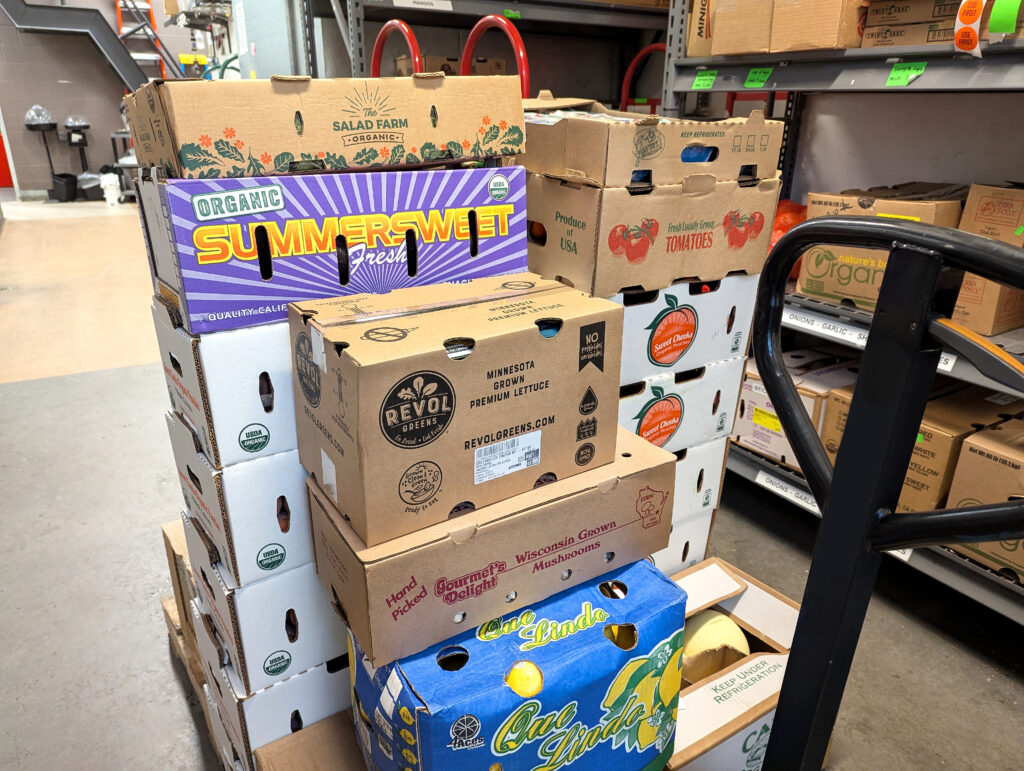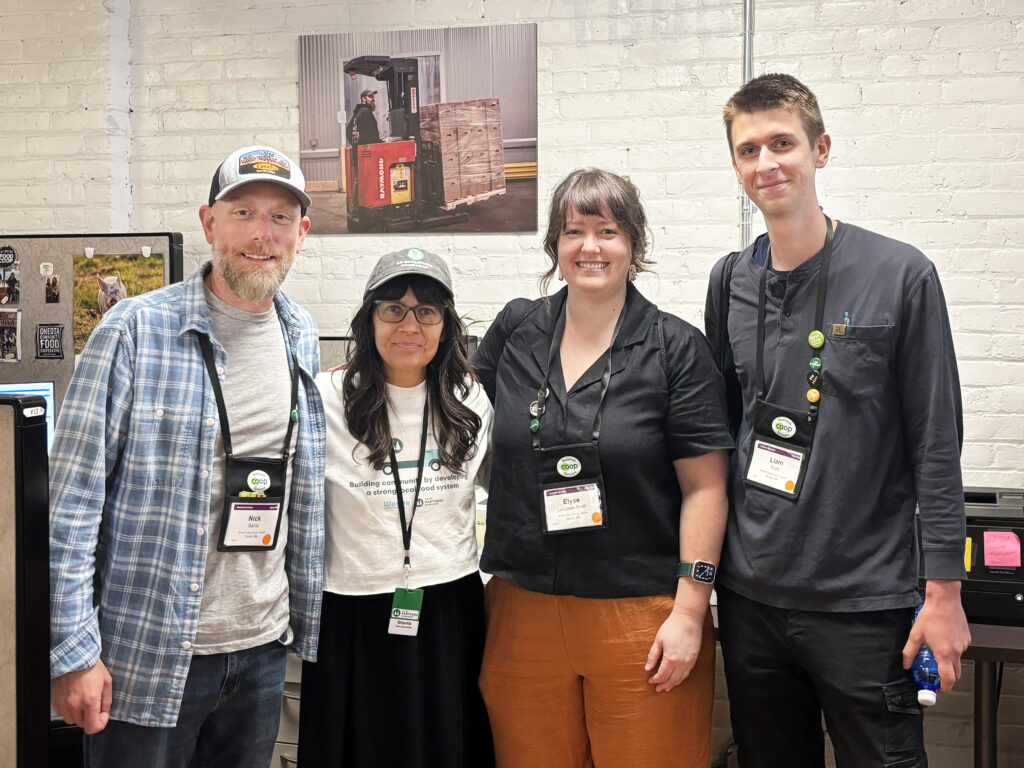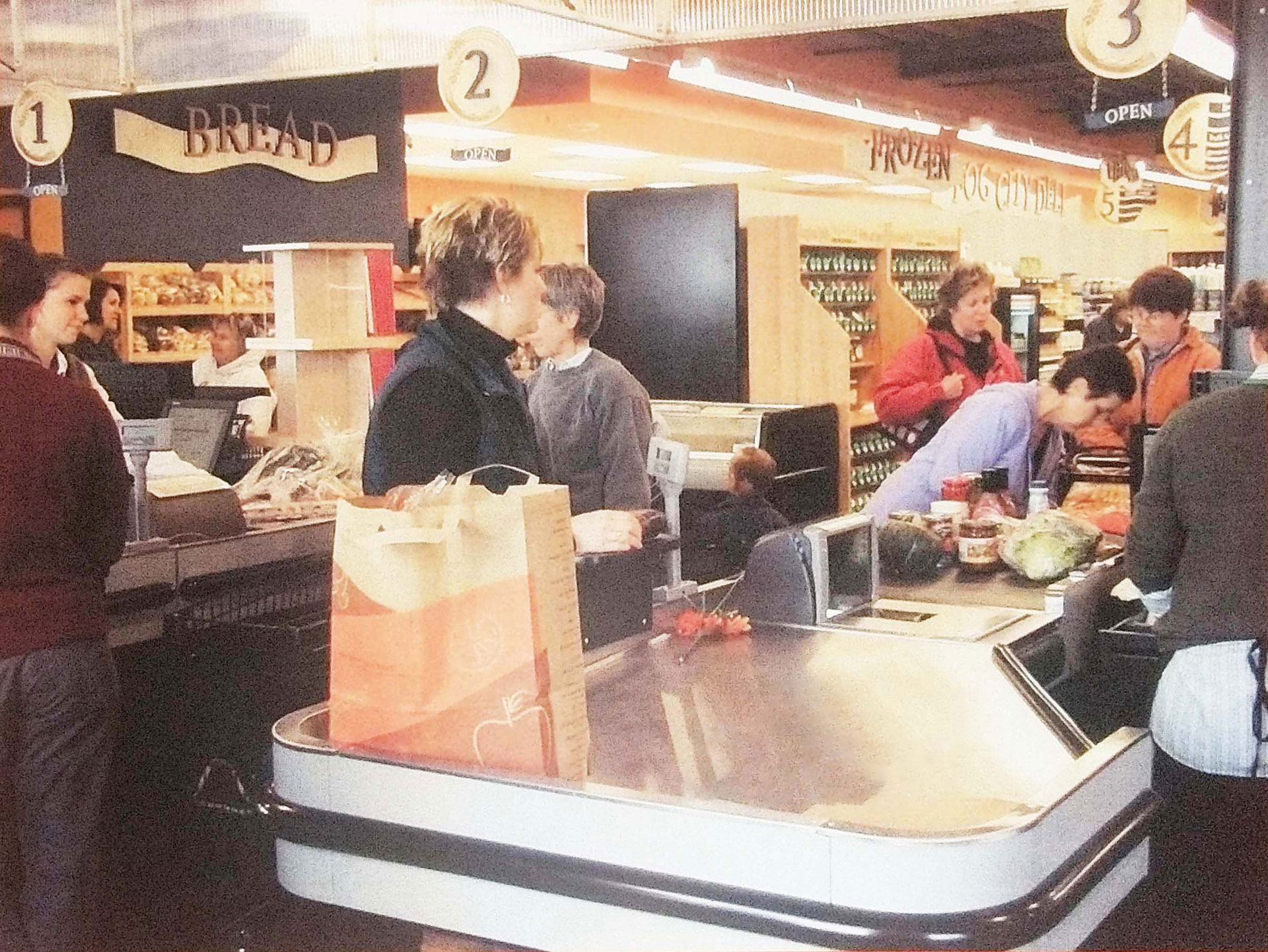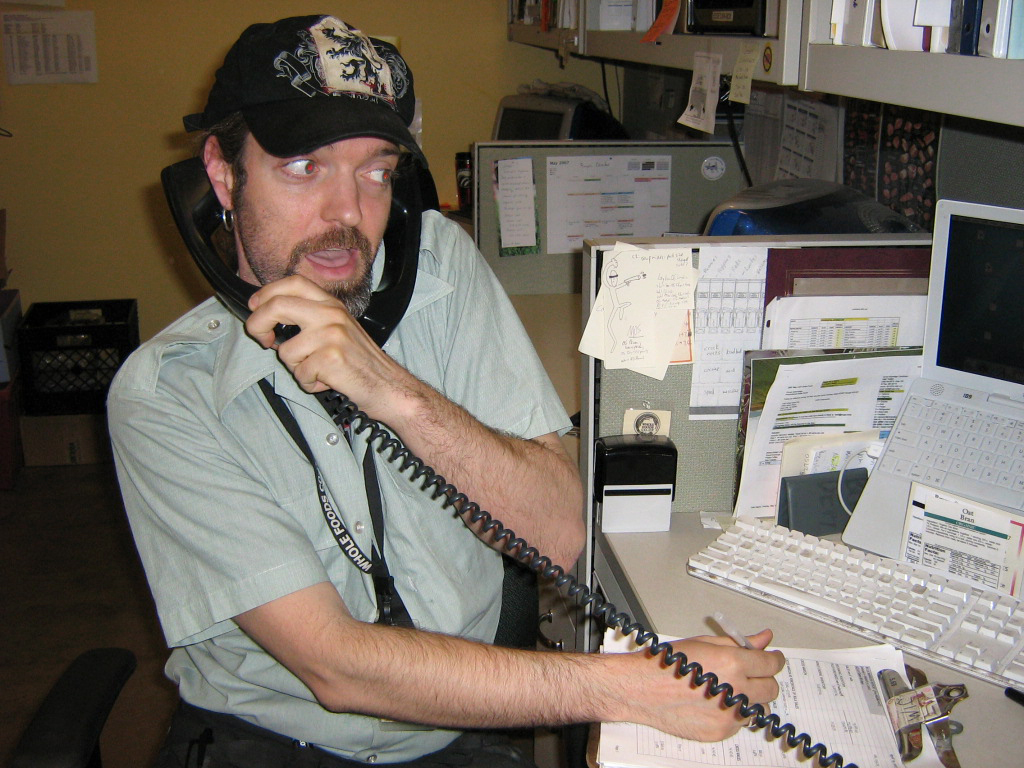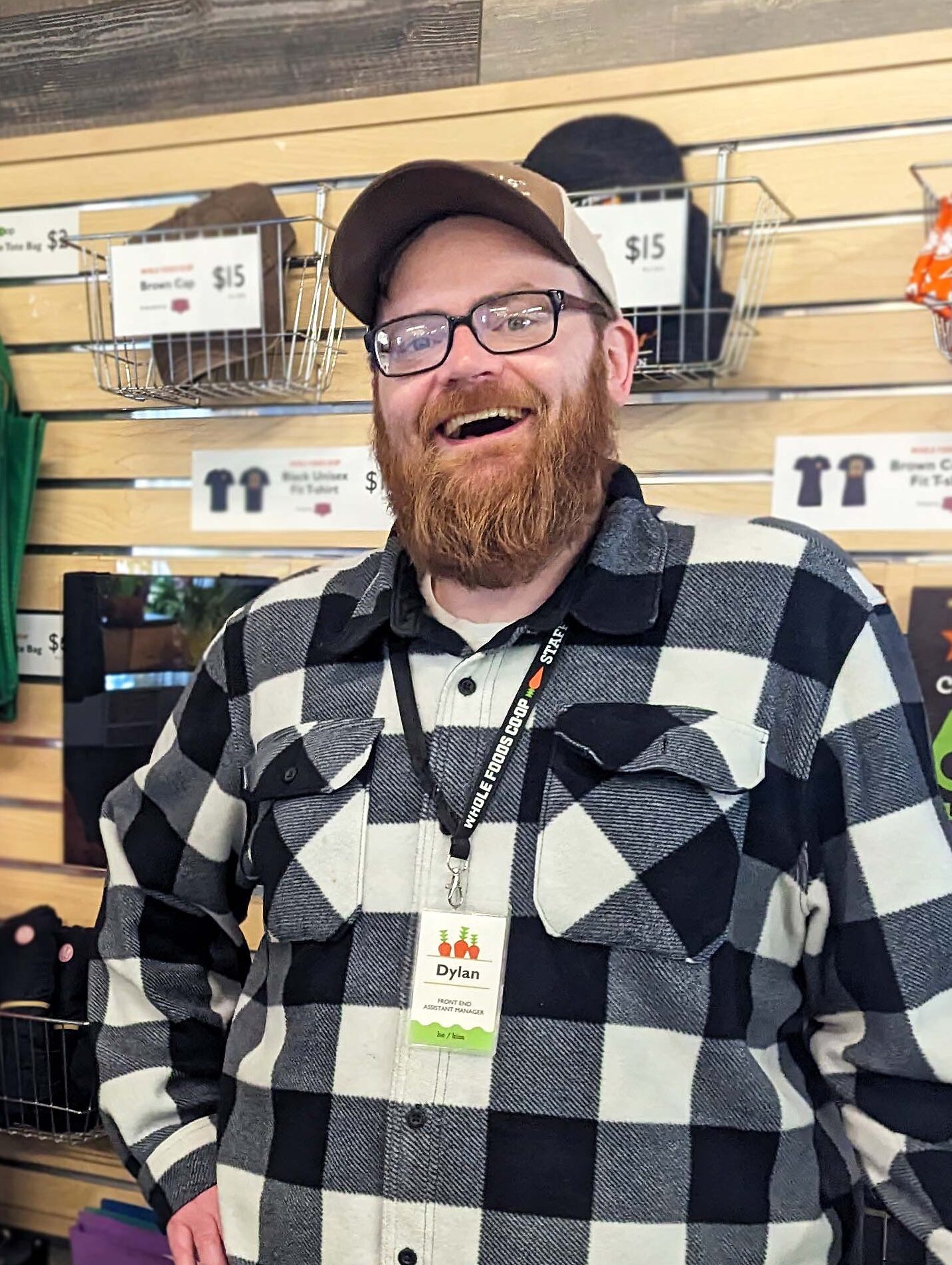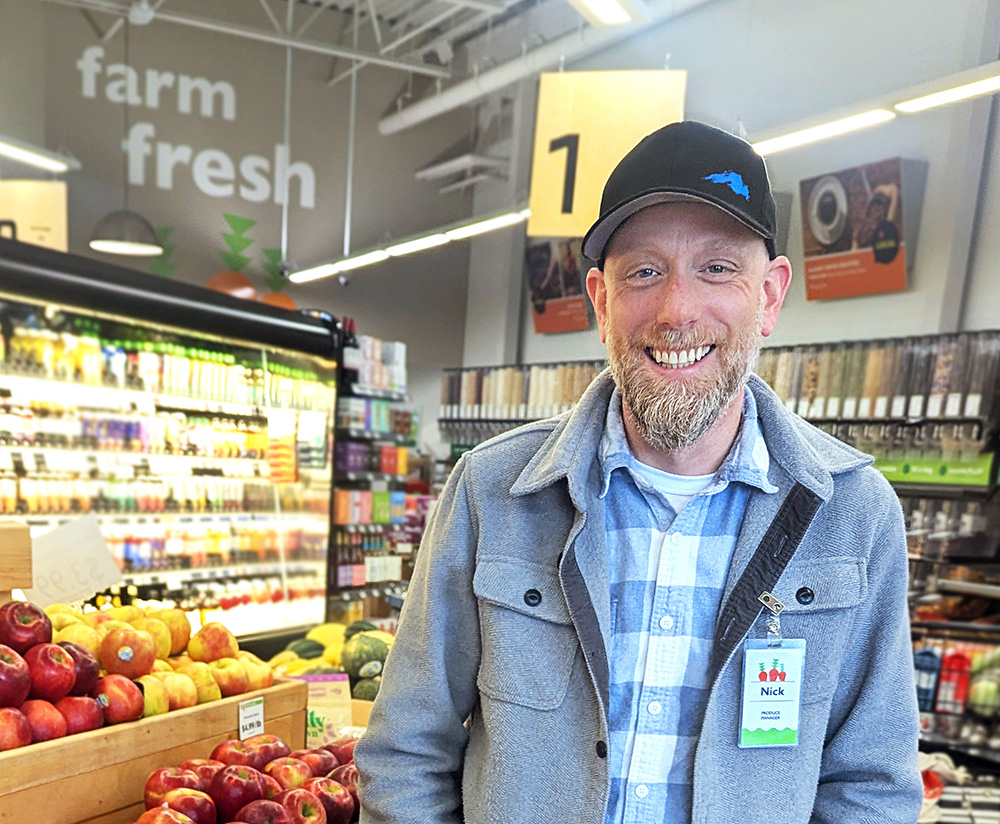


Nick started as the Produce Assistant Manager at Hillside, and when the Denfeld store opened in 2016, he was promoted to Produce Department Manager to oversee the new department. And while his roles and responsibilities have evolved, he has continued to ensure our shoppers are greeted by fresh, fragrant, local and colorful flowers and foods the moment they walk into our stores.
Nick’s days are varied, as he manages all aspects of the produce department, including personnel, product and department financial metrics. He also works directly with farmers to support the local produce season. “Sometimes I get to stock produce, sometimes I get to buy produce,” he said of his role. But as far as what he loves about being a Produce Manager, it’s “the people I work with,” he said. “Learning from and building relationships with co-workers and local farmers and growers in our community and beyond continues to be my favorite thing about my work.”
Whole Foods Co-op and Resource Renew Celebrate Compost Partnership
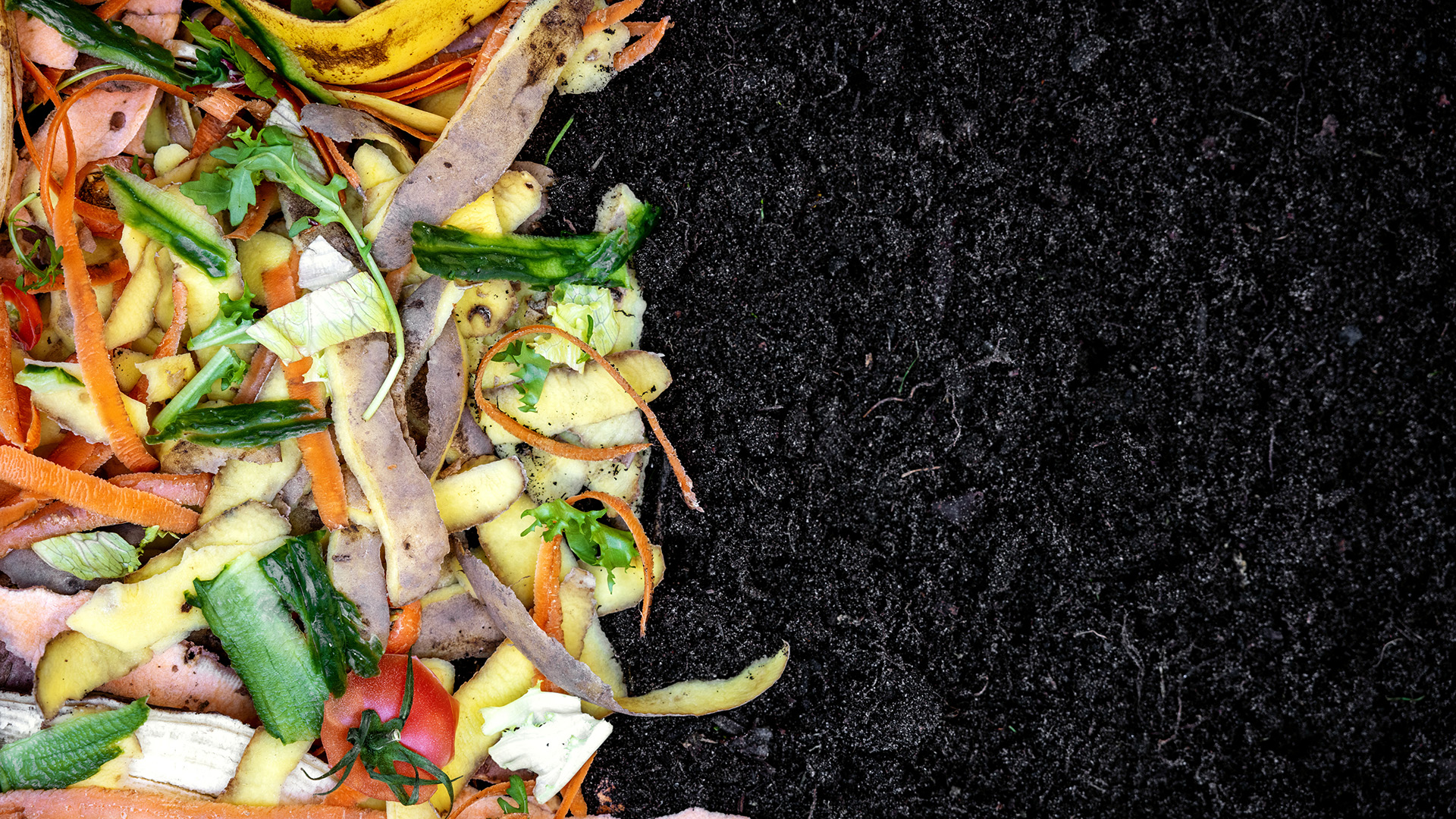
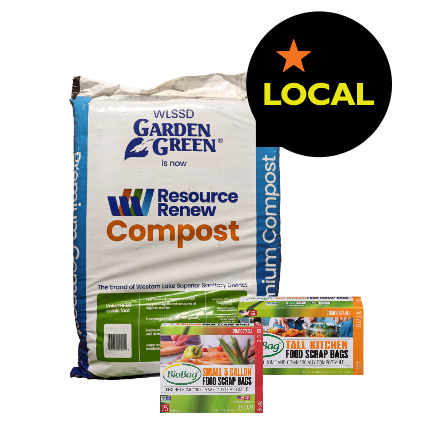
Compost is a nutrient-rich addition to any garden. Previously known as Garden Green, Premium Compost is a special compost created from local food scraps and yard waste and is processed right here in Duluth at Resource Renew, the brand of the Western Lake Superior Sanitary District. Premium Compost is available seasonally at both Whole Foods Co-op stores.
Given the popularity of Premium Compost and our Owners’ love for composting, in April 2025, the Denfeld store became a Food Scrap Drop Site for Resource Renew’s composting program, making it easier than ever for Co-op shoppers to practice composting.
“Shoppers have been asking for us to be a Food Scrap Drop Off Site,” said Erika Osterman, Store Manager of our Denfeld location. “We’re thrilled to be able to provide this service and to help make it easier for our neighbors to keep food scraps out of the landfill.”
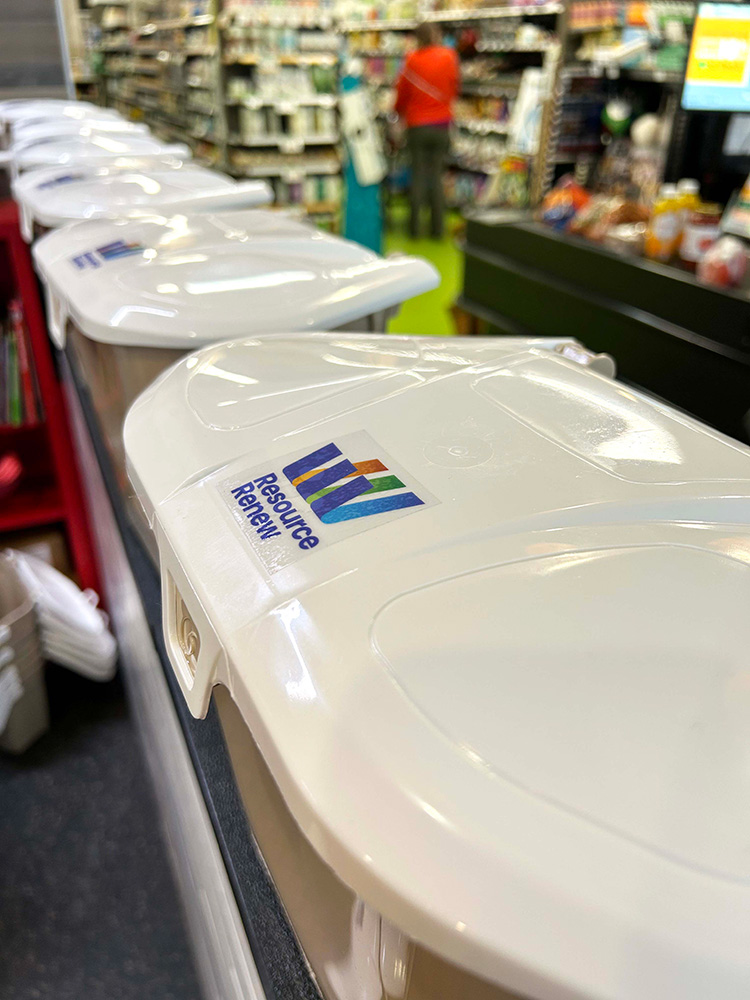
Food Scraps Drop Site bin at the Denfeld Whole Foods Co-op.
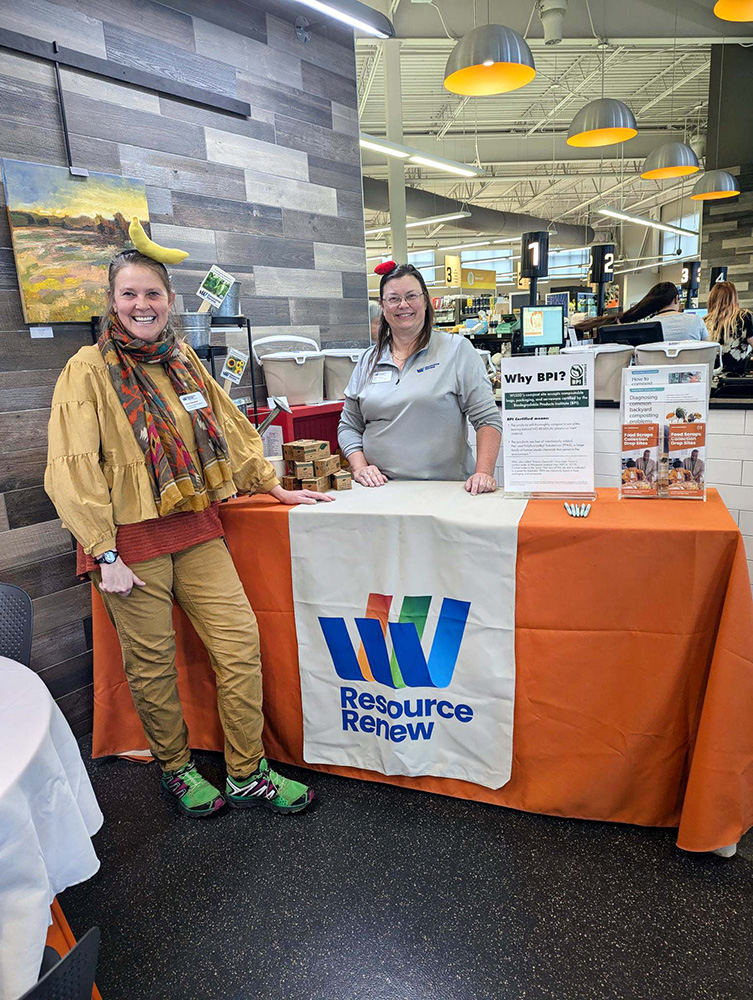
Dori Decker and Lorilee Blais, Resource Renew Environmental Program Coordinators, tabling at the Food Scraps Drop Site Launch Party at the Denfeld Whole Foods Co-op.
Whole Foods Co-op is excited to build on its partnership with Resource Renew, whose composting program keeps over 2,500 tons of organic matter out of landfills every year.
When asked why composting is so important, Dori Decker, Environmental Program Coordinator at Resource Renew shared, “Twenty percent of the trash in our district that is going to the landfill is food waste. Diverting food scraps from the landfill can preserve the longevity of our region’s landfill, which is projected to close in 2026, reduce greenhouse gas emissions, and reduce household trash volume (which can mean savings for the household!).”
The Food Scraps Drop Site bin is open 24/7 for people to deposit their food scraps. At-home food scraps buckets and BPI-certified compostable bags are available for free through Resource Renew, and additional bags are available for sale at both Co-op stores. Resource Renew encourages the use of BPI-certified bags to keep the drop sites clean and reduce critters and bugs.
This partnership between Whole Foods Co-op and Resource Renew closes the loop, turning food scraps into valuable compost while supporting the environment. Owners, shoppers, and community members are invited to use the Food Scrap Drop Off Site in their composting routine and are encouraged to complete the loop by looking for Resource Renew Premium Compost at Whole Foods Co-op every spring to nurture their gardens.
Resource Renew Premium Compost and BioBag BPI Certified Food Scrap Bags are available seasonally at both Whole Foods Co-op stores!
The Composting Process
Just how does a banana peel and coffee grounds become compost, a nutrient-rich soil? They follow a 9-month journey at Resource Renew’s facility.
Steps:
Material Collection: Residents and businesses drop off organic materials at designated sites, including the Whole Foods Co-op Denfeld store. Drop site accepted materials include food scraps and BPI-certified compostable products, which are free of plastic, metals, and other non-compostable items. Please note that yard waste is to only be dropped off at the Yard Waste Compost Site.
Sorting: Collected materials are transported to the composting facility, where they are meticulously sorted to remove contaminants.
Grinding: Larger organic materials are ground into smaller pieces to accelerate decomposition.
Mixing and Aeration: Ground materials are combined with the daily delivery of food scraps to create a uniform mix of carbon-rich and nitrogen-rich materials. Aeration promotes microbial activity, essential for effective decomposition.
Active Composting: Compost is placed in large, aerated windrows, or piles, for several weeks, with staff monitoring temperature, moisture, and oxygen levels. High temperatures help eliminate pathogens and weed seeds. Compost can reach temperatures exceeding 150 degrees.
Turning and Monitoring: The compost pile is periodically turned to maintain optimal conditions for microbial activity.
Curing: After active composting, the material cures for several months, allowing it to mature and stabilize its nutrients.
Screening and Packaging: Mature compost is screened to remove oversized particles and contaminants, then packaged for distribution.
Community Distribution: Premium Compost is available for purchase throughout the area, including at both Whole Foods Co-op stores.
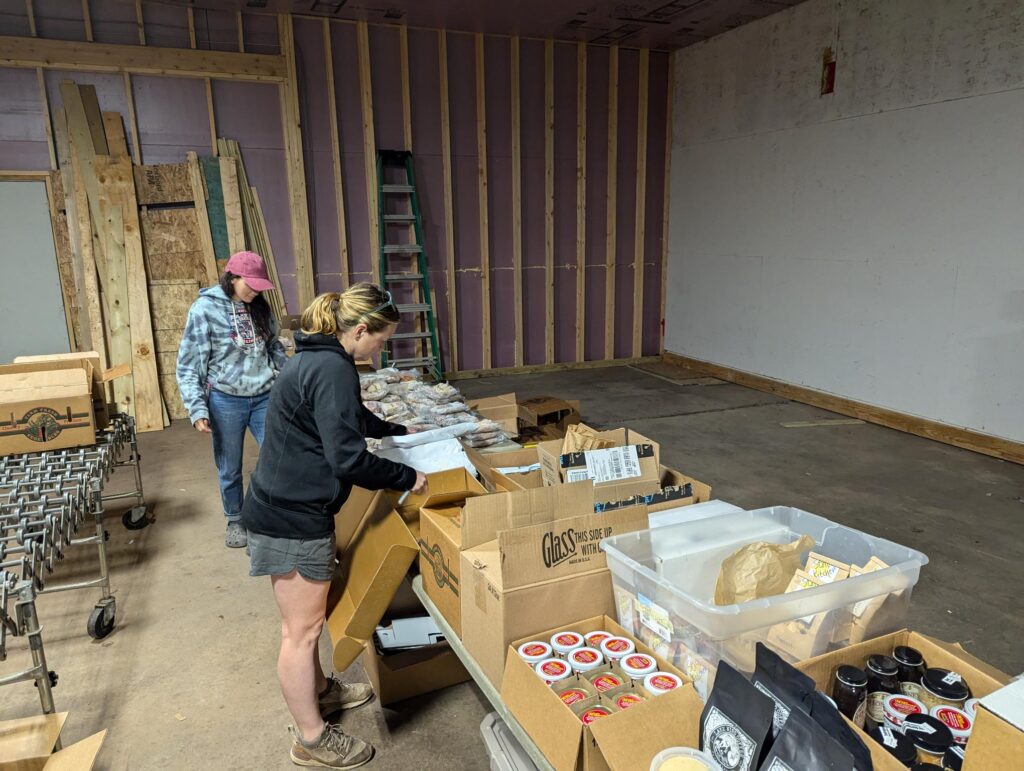
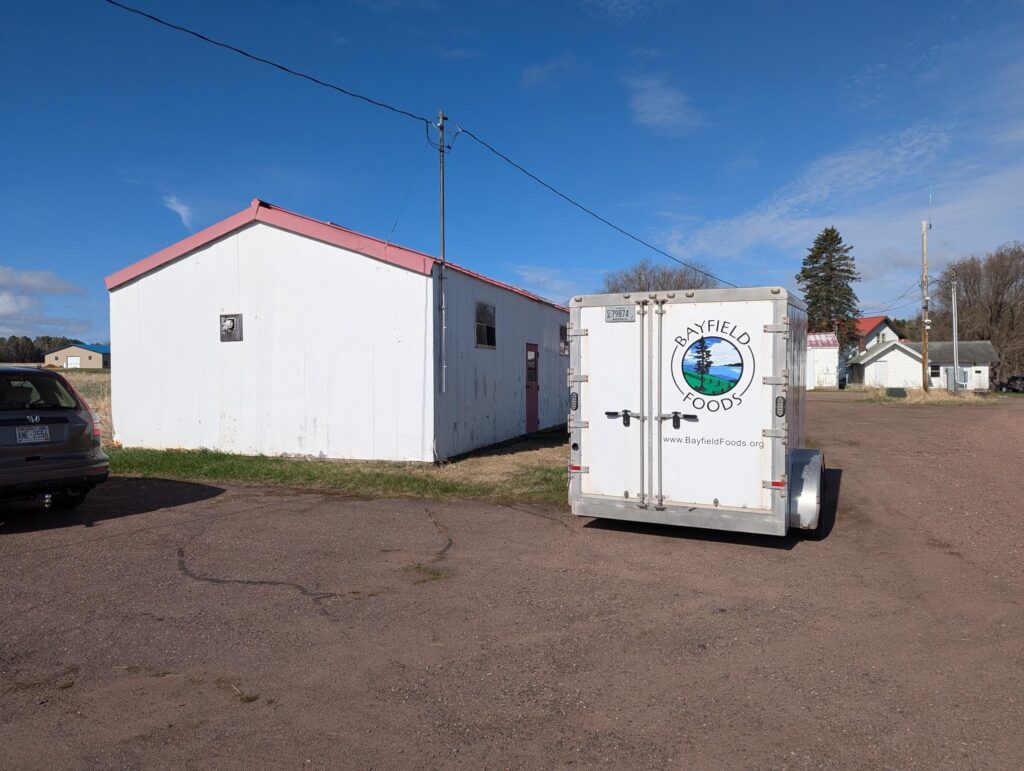
“Today is pack-up day,” said Laura Ashenbrener, Bayfield Regional Food Producers Cooperative’s General Manager. Once a week, producers from across the Chequamegon Bay region bring their goods to the co-op’s aggregation center in Ashland, WI.
On a cool but sunny spring morning, the warehouse’s two conveyor belts were bursting with products. Throughout the year, freshly picked fruits, vegetables, meat, baked goods, honey, flowers, and other products will pass through the same area to be sorted, packed, and sent to drop sites. “Our delivery driver goes up to Duluth and Superior twice a week,” said Ashenbrener, looking over the product being prepped for the voyage.
Also known as Bayfield Foods, the producer-owned cooperative unites 21 member farms and food producers across the region. Whole Foods Co-op shoppers may recognize some of their member-owners, including Café Coco, Drifty Acres, and Observation Hill Farm. Between the owners, Bayfield Foods provides over 400 different products through their year-round Community Supported Agriculture program (CSAs).
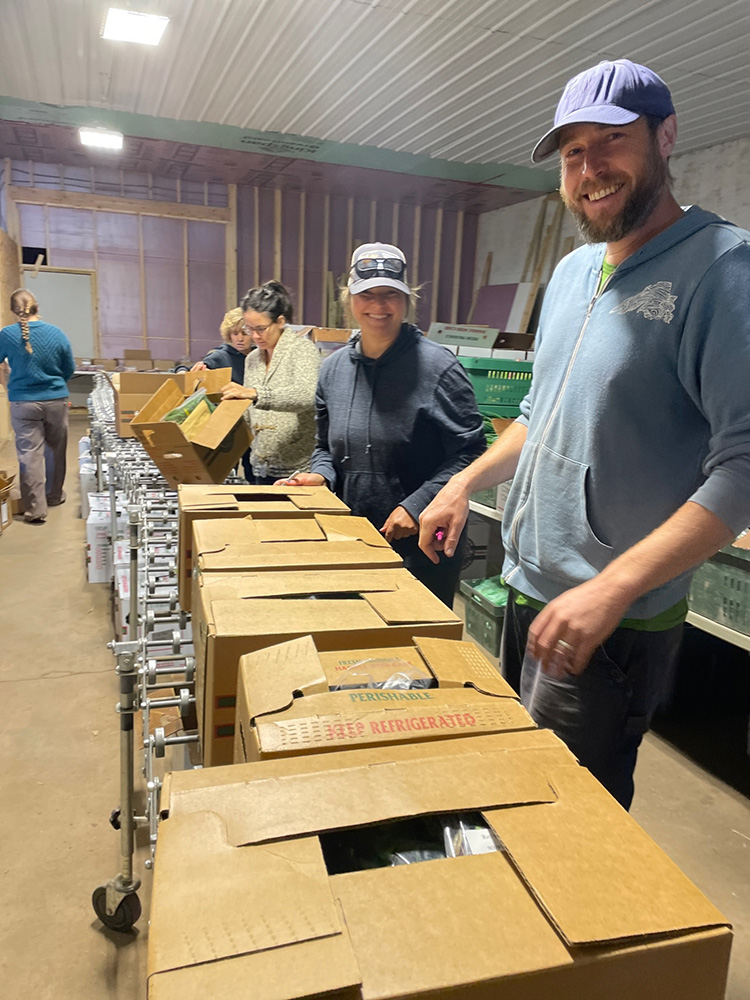
Farmers Abigail Klema of Suri Fina Farm and Rob Hartman of Twisted Twig Farm pack CSA boxes at Bayfield Regional Food Producers Cooperative. Photo courtesy Bayfield Foods.
By working as a co-op, members become stronger together. Farmers pool resources, gain access to storage facilities and equipment, and collectively market their products. They are also able to tap into a large distribution network. The CSA program alone will distribute over 300 weekly shares over the summer. For the individual farmer, this means that, with a single delivery to the aggregation center, they can reach more than 300 customers from Bayfield to Cloquet!
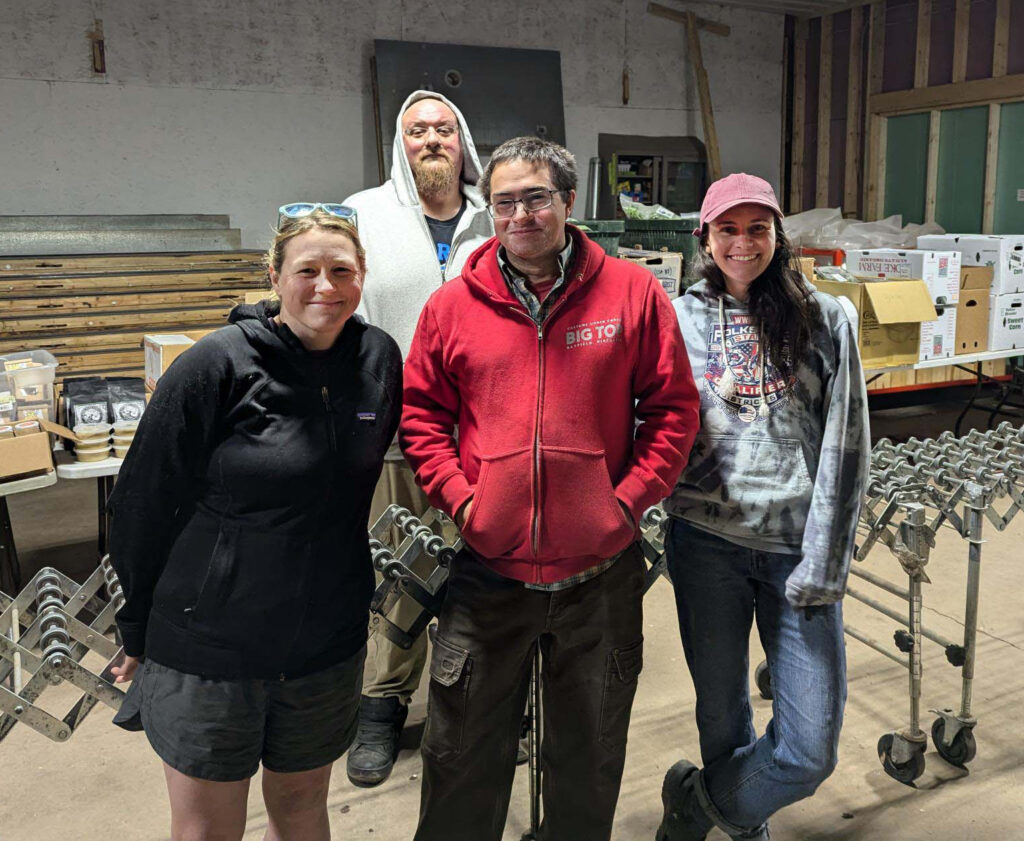
From left to right: Karra Prudhomme, Bayfield Foods CSA Manager; Mike Gordon; Brian Clements of Northcroft Farm; and Laura Ashenbrener, Bayfield Foods General Manager.
“There was a group of farmers looking for ways to move their products locally, more efficiently, and out of the area,” explained Brian Clements of Northcroft Farm, one of the owners and current board chairman.“It doesn’t make much sense for multiple farmers to drive to Duluth separately, so they started the two programs.”
In addition to the CSA program, Bayfield Foods operates as a wholesaler, providing efficiency for both farmers and buyers. The entire catalog of products is accessible through a single point of contact, streamlining what would typically involve multiple orders from various farms.
Bayfield Foods also supplies schools and local restaurants. “In the Duluth/Superior area, the Superior School District buys a lot of apples and fruits when in season,” Ashenbrener said. As for restaurants, “One of our biggest customers is St. James Social in Bayfield. They really prioritize local and seasonal foods.”
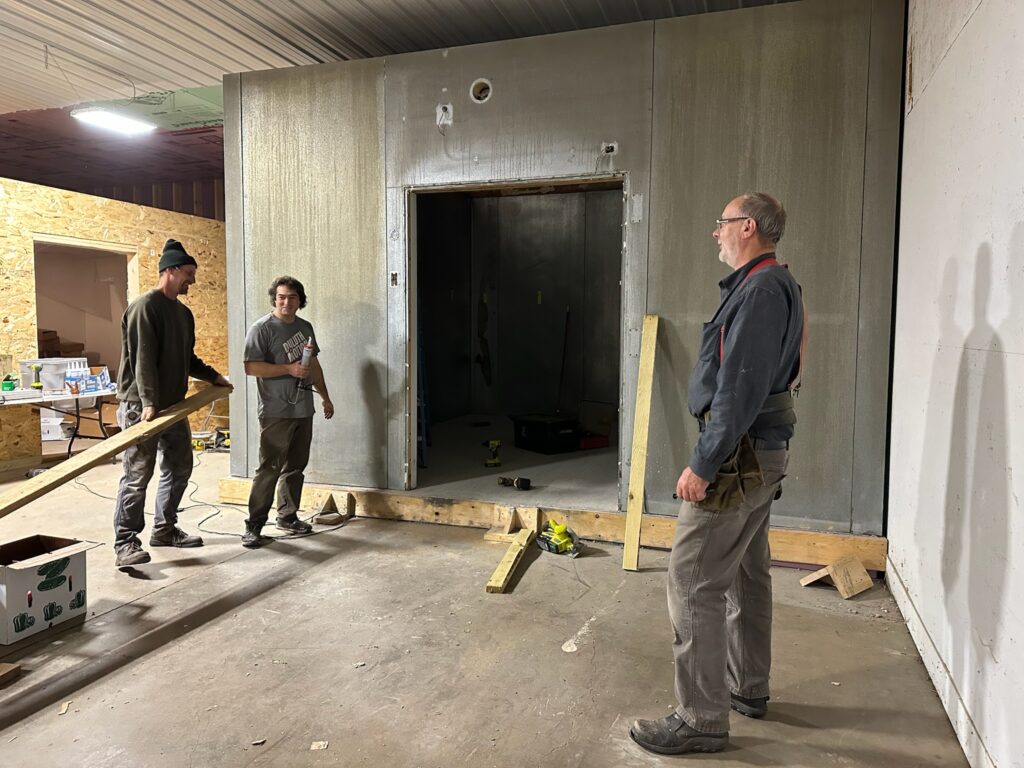
With an eye towards continuing to support its member-owners into the future, the cooperative recently received a Whole Foods Co-op 2025 Grow Local Food Fund grant to enhance its infrastructure through purchasing a new 15′ x 15′ walk-in freezer. With anticipated installation in the fall, the freezer will increase space, reliability, and efficiency. “We can offer appropriate storage for the meat producers,” Ashenbrener said of the investment. “If they need storage, they can rent freezer space [from the aggregation center]. It’s an affordable option for local farms.”
This year marks 15 years of the Bayfield Regional Food Producers Cooperative, and they continue to adapt and grow. But, when asked what she loves about her work, Ashenbrener is drawn the community, “I know a lot of the farmers, and I like working for them. I like working with local foods; it’s a big community passion in this area. Local places are really important.”
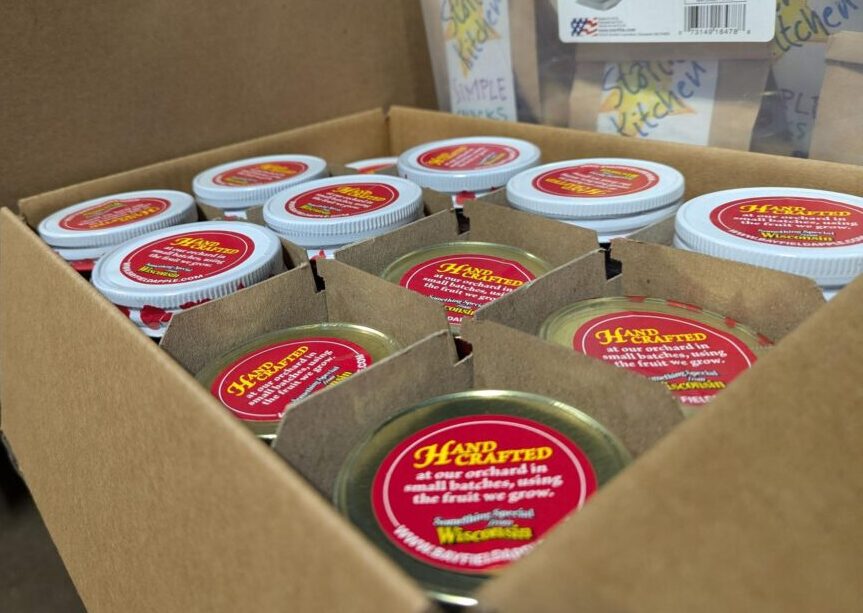
From left to right, Board Members: Travis Pydo, Heritage Acres; Brian Clements, Northcroft Farm and Board President; and Dave Kositzke, Bayfield Apple Company.
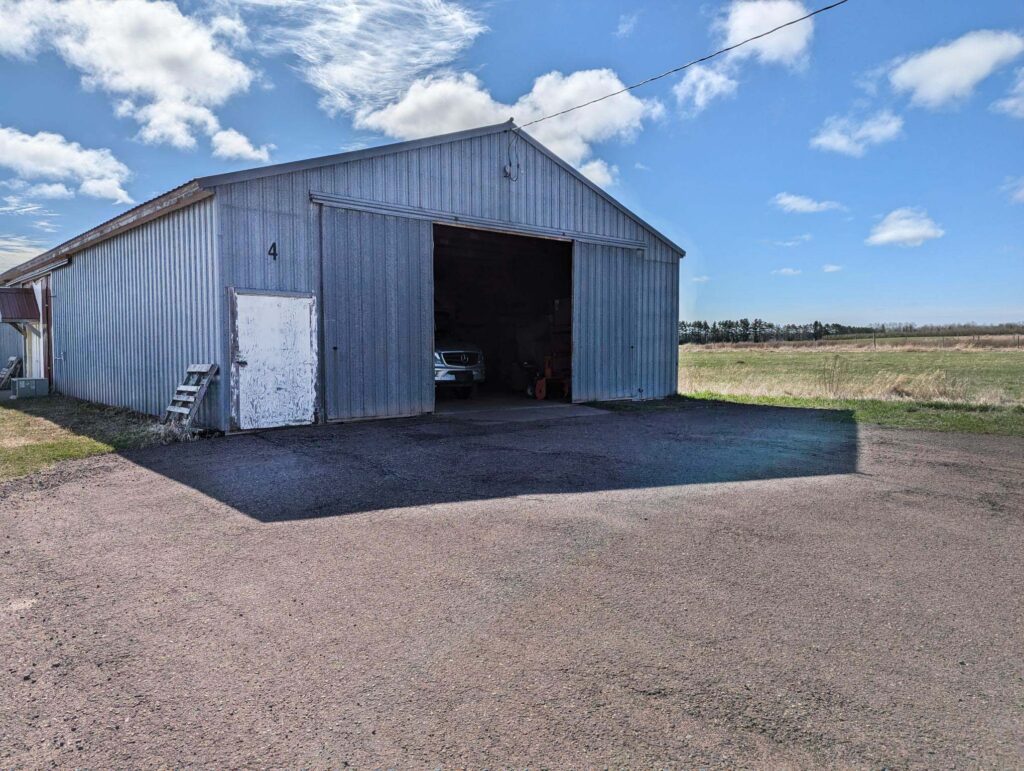
Work is underway to prepare the space for the new 15′ x 15′ walk-in freezer! The slab has been poured, the walls are up, and they will be putting the ceiling panels on next week. A contracter is then going to come in to install the equipment.
The United Nations has designated 2025 as the International Year of Cooperatives. In recognition, Whole Food Co-op will be celebrating throughout the year! We’ll be highlighting cooperatives we’re in cooperation with in-store and here in the Co-op Blog. We’re excited to share the stories of co-ops that are creating quality products while having a positive impact on communities across the globe.
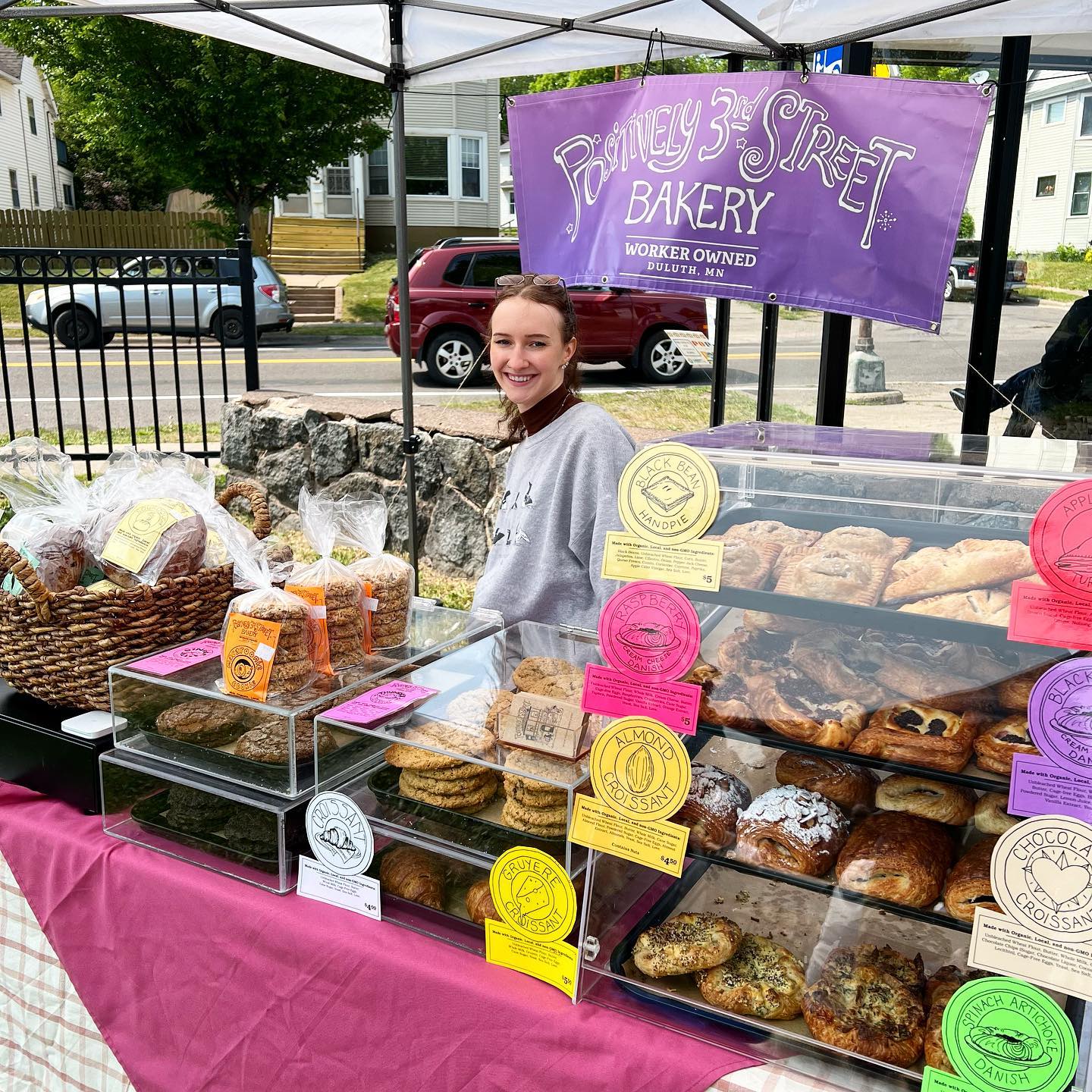
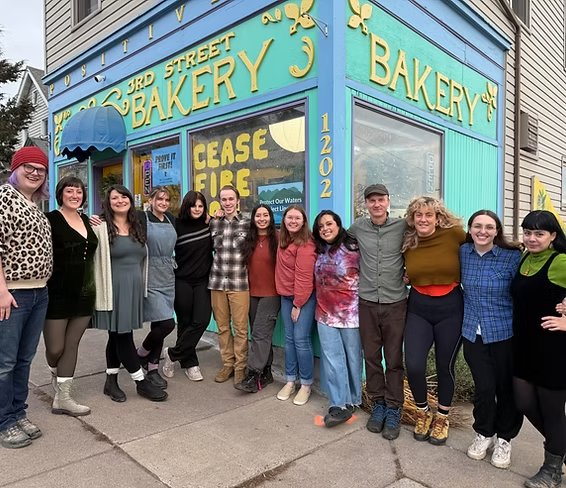
Nestled in Duluth’s Hillside neighborhood is Positively 3rd Street Bakery, a local establishment known for its delectable baked goods and commitment to employee ownership.
Founded in 1983 by a group of passionate bakers dedicated to a cooperative mindset, Positively 3rd Street Bakery was created to foster community spirit while producing high-quality artisanal baked goods. The bakery operates as an employee-owned cooperative, allowing employees to share in the business’s profits. This commitment to employee ownership aligns with the bakery’s mission to cultivate a positive workplace culture and provide quality goods to customers.
Currently, the bakery has thirteen worker-owners, with plans to add another this year. Working at a small, employee-owned business involves more than just submitting an application; every employee must contribute and be willing to take on various roles. “Everyone is hired in production,” said Angi, one of the worker-owners, “but eventually finds their talent in business ownership.”
The founders understood the importance of using high-quality, locally-sourced ingredients, a practice that is still crucial to the bakery today. “Our most important factors when considering an ingredient vendor are quality, locality, and cost,” said Angi. This focus, combined with traditional baking methods, quickly garnered a loyal following among Duluth residents.
Different Cooperative Business Structures
While Positively 3rd Street Bakery and Whole Foods Co-op are both cooperatives, the two businesses reflect different structures within the cooperative model. Whole Foods Co-op is a consumer cooperative. In this model, the business is owned by its shoppers, who democratically elect a Board of Directors to guide its operations. In contrast, Positively 3rd Street Bakery is a worker-owned cooperative, which means they are owned and run solely by the workers, who have a controlling interest in the business and elect the governing body. While daily operations may differ, both businesses uphold the internationally accepted cooperative principles to direct their overarching missions.
Current Offerings
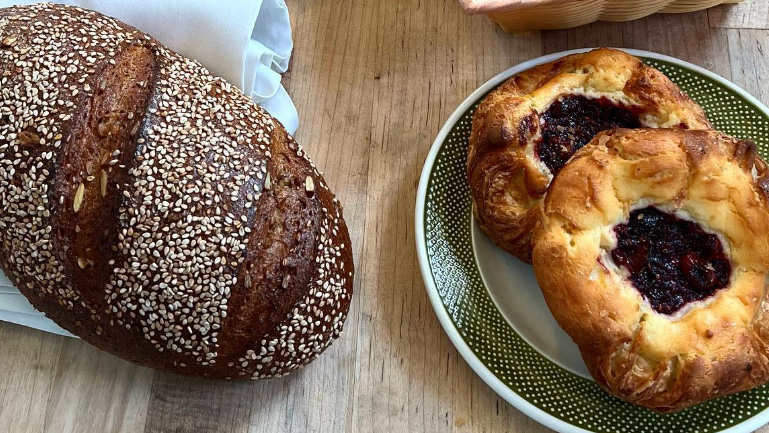
Positively 3rd Street Bakery is a vibrant hub for locals and visitors alike, offering an array of delicious options that include artisan breads, pastries, cookies, and savory items. The bakery utilizes some original recipes from 1983 while also creating new favorites, emphasizing sustainability by using organic ingredients whenever possible and prioritizing environmentally friendly practices.
A Unique Way to Give Back
In the spirit of community engagement, Positively 3rd Street Bakery focuses on local involvement and mutual aid. Historically, the bakery spends little to no money on advertising, redirecting those funds to support community organizations through donations and fundraisers. They actively participate in farmers’ markets, food festivals, and community support initiatives, creating strong connections in the region through their mission of unity and support.
Looking to the Future
The employee-owners of Positively 3rd Street Bakery have ambitious plans. Given that the bakery has outgrown its current location, a two-story house, the group is actively seeking a more suitable space. “We have toured many potential buildings for a new location,” Angi said, “but we love and are dedicated to the Hillside.”
Despite the challenges posed by their limited space, they aim to continually innovate their product offerings by exploring new flavors and expanding the menu to attract a broader audience.
With a rich history rooted in artisan baking and a promising future focused on innovation and sustainability, Positively 3rd Street Bakery invigorates the local food scene. Find their fresh baked sweets and breads daily on the shelves at both the Hillside and Denfeld stores!
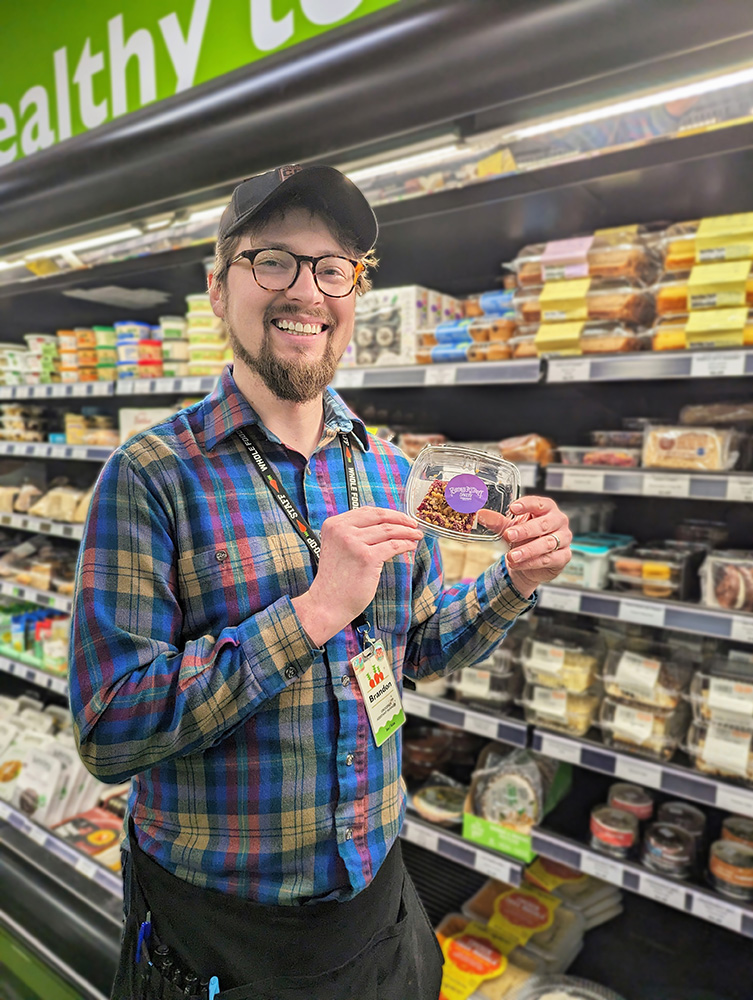
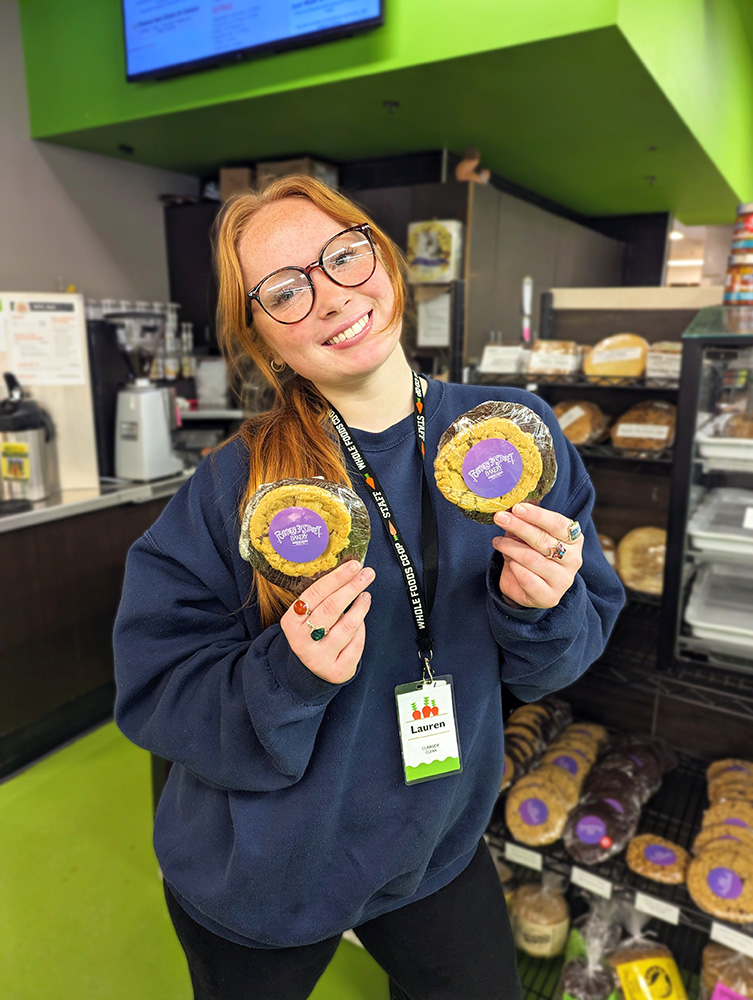
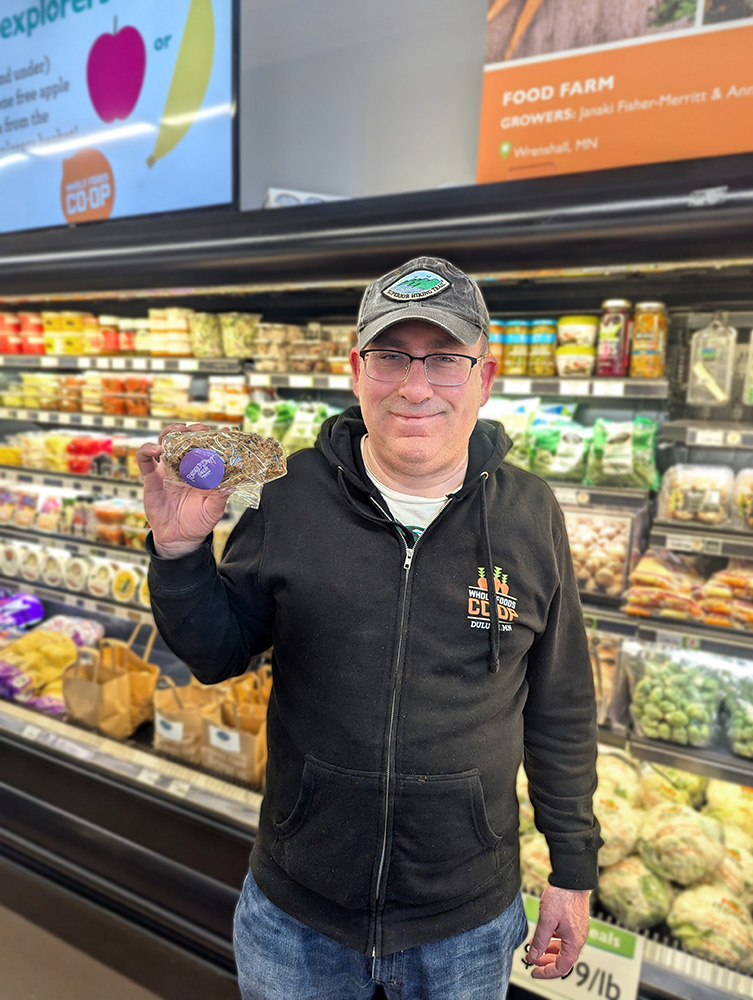
Co-op Staff Favorites: Positively 3rd Street Bakery
Blackbird Bread
Robert
Raspberry Bar
Brandon
Eclipse Cookie
Lauren
Blueberry Scone
Warren
The United Nations has designated 2025 as the International Year of Cooperatives. In recognition, Whole Food Co-op will be celebrating throughout the year! We’ll be highlighting cooperatives we’re in cooperation with in-store and here in the Co-op Blog. We’re excited to share the stories of co-ops that are creating quality products while having a positive impact on communities across the globe.
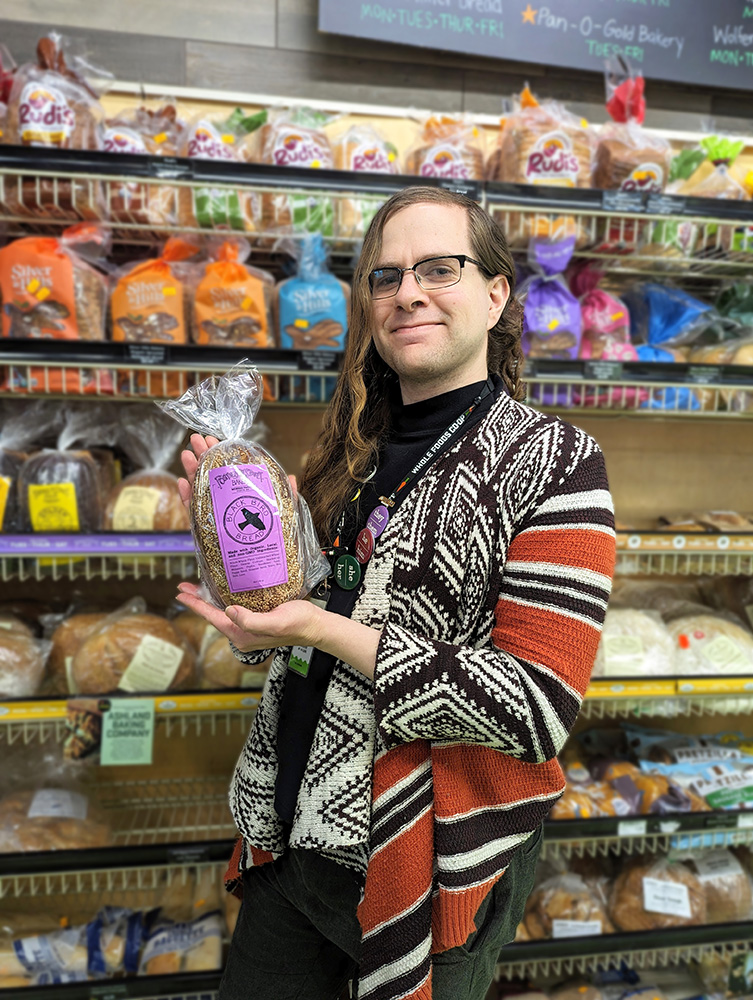
Arno Kahn’s path to Whole Foods Co-op was by way of a party in New York City. “There was a couple at a party in Harlem,” Kahn said. “I mentioned to them that I had a Number Two Duluth Pack. We struck up a conversation and the next time I was in Duluth, I visited them. They lived in the Chester Creek House, which was a very large house, and I ended up moving in!”
That house in Chester Creek also happened to be the home of the Food Buying Club, which was to become Whole Foods Co-op.
The Early Days
As a part of the small food buying club that operated out of a shared cooperative home in Duluth’s Chester Creek neighborhood, members of the buying club such as Kahn joined together to purchase bulk goods at lower prices, seeking to provide the community with access to healthier, more affordable food options. In these early days, these folks also took on roles in procurement, distribution, and clerking, ensuring that the organization functioned efficiently despite having no paid employees.
Arno Kahn
Kahn learned about the business of groceries through these early days at the Chester Creek house. He had previous exposure to starting co-ops through a project he did as a student in Brooklyn organizing a co-op garage. And, as the buying club became a co-op, and other co-ops began to pop up across the region, Kahn identified a need in the local food system. “When I first moved to Duluth, there weren’t many local food vendors,” Kahn explained.
To help with procurement and distribution, he started the Common Health Warehouse. The warehouse served as a vital food distribution hub, allowing smaller co-ops to access affordable, high-quality products. “We built the warehouse because there was a real need for centralized distribution,” Kahn recalls. “It was an exciting time, seeing co-ops across the region come together and grow through this shared resource.”
The Common Health Warehouse helped strengthen the regional food economy and solidify a reliable supply chain for co-ops across the Northland.
Building a Sustainable Future
The first Whole Food Co-op locations were modest, including a space on 8th Street and later in the building that now houses Burrito Union. Eventually, the demand outpaced these smaller spaces, leading to the purchase and renovation of the Co-op’s current building on 4th Street and 6th Avenue East in 2005.
The project, which involved renovating an existing structure, emphasized sustainability and energy efficiency. While the original architectural plans included expensive, high-performance mechanical systems, practical compromises had to be made to balance cost with long-term energy savings. Kahn’s contracting firm, Builders Commonwealth, a worker-owned cooperative, was the general contractor on the project. The architectural work was performed by LHB Architects. “This was a fun process,” said Kahn. “We had to weigh cost versus benefit—what was worth the investment and what could be adjusted to keep the project financially feasible.”
Strategic insulation and ventilation choices allowed the Co-op to maximize energy efficiency while maintaining affordability. The building became the first LEED-certified co-op structure in the country, setting a precedent for future projects.
A Lasting Impact
In the years since, Ownership has grown exponentially. “When the Co-op moved to its current Hillside building 20 years ago, Ownership was around 2,500,” Kahn shared. “Now, it’s over 14,000. That kind of steady growth is incredible.”
The Co-op’s ongoing success across the Hillside location and a second location in Denfeld that opened in 2016, is due to the engaged community around it, made up of people like Arno Kahn who have invested their time and energy into building this Co-op from the ground up. From early days of ideation and implementing regional distribution, to the remodel of the current Hillside location, and ongoing maintenance of the current building, the Co-op thrives because of engaged Owners like Kahn.
“There have always been different ideas around what a Co-op should be,” Kahn said. “But ultimately, it has succeeded in creating a welcoming space where people can shop, gather, and support their values through the food they buy.”
Whole Foods Co-op Celebrates 55 Years
This year Whole Foods Co-op marks 55 years of being community-owned and led, making positive impacts on local farmers, shoppers and the communities we serve. In celebration, we’ll be releasing a series of profiles of just a few of the many people across our history who’ve helped shape Whole Foods Co-op into what it is today.
A Compassionate Approach to Raising Animals For Food
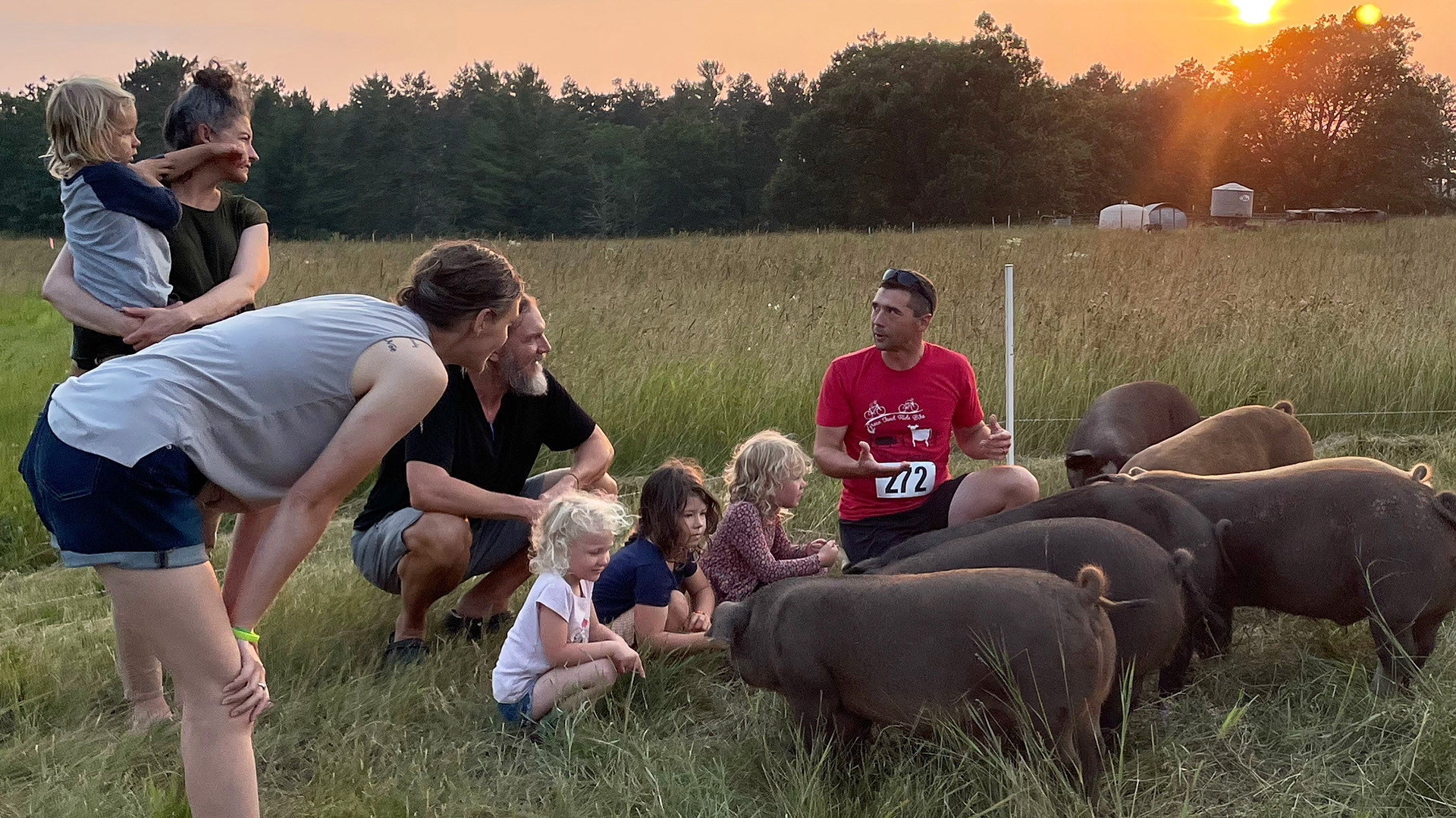
As society is increasingly focused on sustainable living and the ethical treatment of animals, Y-ker Acres stands out as an example of positive farming practices. Located in the heart of Carlton, MN, Y-ker Acres is more than just a farm; it embodies a philosophy that emphasizes humane animal treatment, environmental sustainability, and community engagement. Through their ethical farming method, Y-ker Acres contributed about 50 different pork and beef products to our local food economy last year, equaling roughly 80,000 pounds of meat.
The Stampers
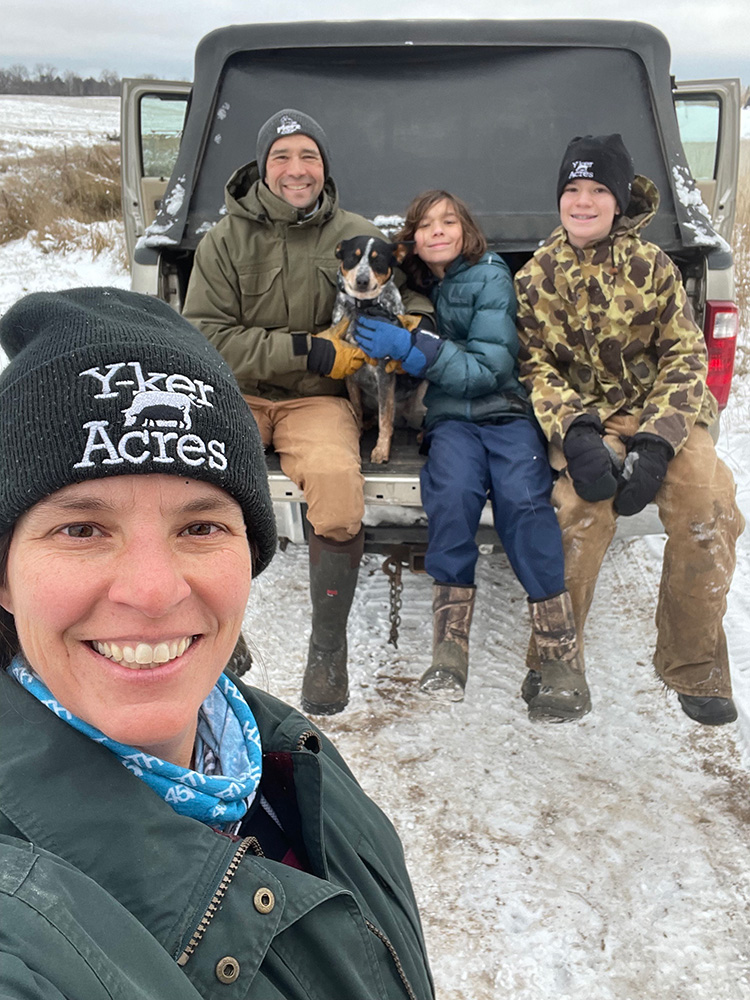
In November 2021, Joshua and Alison Stamper became the proud owners of Y-ker Acres, having purchased the land and business from Matt and Sara Weik. The Stampers are dedicated to providing the highest-quality pork and beef products by raising their animals humanely and ethically. “Less than 1% of pork is raised outside with access to pasture,” Alison said of the pork industry. “But at Y-ker Acres, animals spend their entire lives outdoors, living their best lives,” Joshua added.
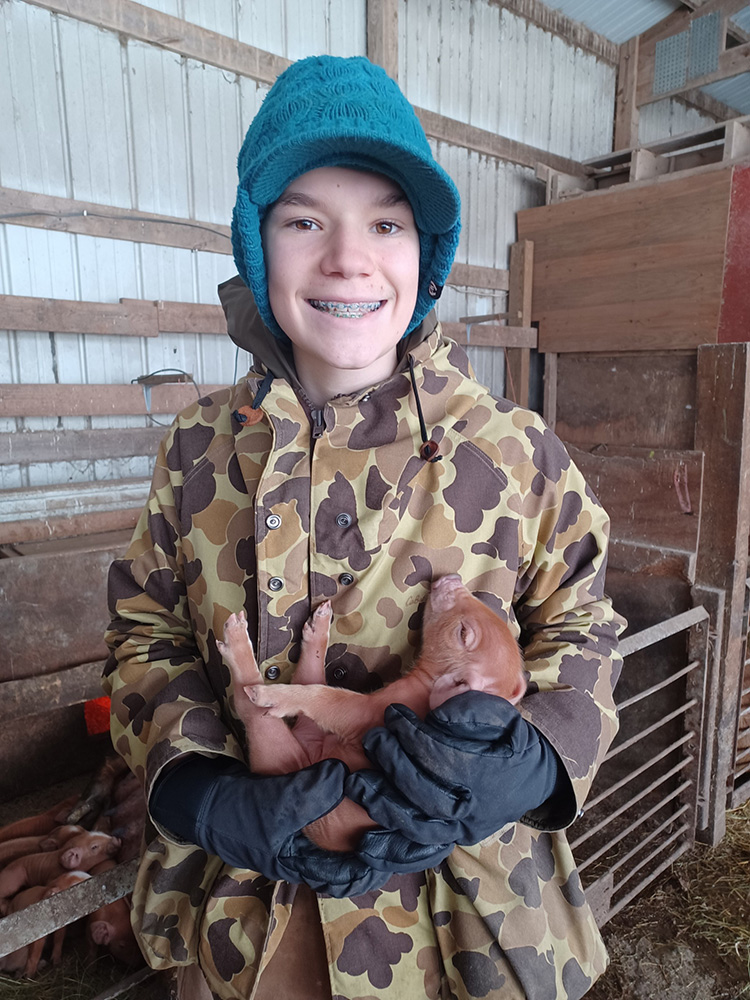
Joshua and Alison do not manage the farm alone; they share this journey with their young sons, Jasper and Griffin, who are excited to grow up on a livestock farm and learn everything involved in caring for the animals. Y-ker Acres is also supported by two year-round employees.
Animal Husbandry
Y-ker Acres’ core philosophy revolves around the belief that animals deserve respect and compassion. This belief guides every aspect of their farming operations, from the animals’ living conditions to the methods used for processing them for food. The farm operates under strict ethical guidelines and is deeply committed to raising animals in a manner that prioritizes their well-being.
The animals at Y-ker Acres have 80 acres of space to roam freely. “All of our animals have 24/7 access to open pasture at every stage of their lives post-weaning,” Alison said. The animals always have access to this natural environment, as well as a vegetarian diet free from harmful additives.
One of the most critical tasks on the farm is ‘Cozy Patrol,’ conducted twice a day. Its purpose is to ensure that animals have everything they need, including food, water, shelter, and reassurance that they are being cared for to ensure their animals lead a ‘full existence,‘ as they refer to their animals’ daily lives.
Sustainable Practices for a Healthier Planet
Y-ker Acres recognizes that food production significantly impacts the environment. Their farming practices are designed to minimize this impact through sustainable methods that benefit both the land and the animals. This includes rotational grazing, which helps restore soil health and encourages biodiversity. By working with nature rather than against it, Y-ker Acres ensures that their practices are environmentally friendly and sustainable for future generations.
Additionally, the farm is committed to reducing waste. Animal waste is composted and used to enrich the soil, creating about 100 tons of compost each year to improve the sandy soil. This reinforces Y-ker Acres’ commitment to environmental stewardship.
A New Kind of Animal Agriculture
Y-ker Acres employs a holistic approach that not only promotes the health of the animals but also contributes to the quality of the food produced. By treating animals with care and dignity, Y-ker Acres aims to foster a relationship between humans and animals rooted in respect rather than exploitation.
As they continue to grow and evolve, Y-ker Acres serves as a model for a new kind of animal agriculture that respects the natural instincts and needs of animals, prioritizes environmental health, and fosters a sense of responsibility within the community. Their philosophy serves as a reminder that raising animals for food can be done in a way that honors and respects their lives, ultimately leading to better food and a healthier planet.
The Positive Impact of Community Gardening Programs
As the ground begins to thaw, many of us are pulling out our gardening gloves, including those behind area nonprofits who are working to connect community members to the land. Whole Foods Co-op is proud to support several initiatives that are helping to bring people of all ages to area gardens, which are building access, important skills, as well as community, around fresh food. Two of these organizations include Eco3 Urban Farm and Duluth Farm to School.
Eco3 Urban Farm
Located above Lake Superior College, Eco3 Urban Farm boasts two acres of high tunnels, perennial fruit and flower gardens, raised beds, and developed fields. Eco3 Urban Farm is part of Ecolibrium3’s food access initiative that creates opportunities for residents, students, growers, and food entrepreneurs.
The urban farm not only produces fresh food, but has become a community hub, hosting classes, field trips, and other educational events. The high tunnels are filled with seedlings that will be distributed to community gardens and partner organizations throughout Duluth. It also provides volunteer opportunities for individuals to participate in hands-on gardening. And, perhaps most importantly, the site fosters community building and intergenerational social connections through gardening.
Duluth Farm to School
Duluth Farm to School began in 2012 and has expanded to include multiple gardens hosted at schools throughout Duluth. The primary goal is to encourage youth to eat more fruits and vegetables by engaging them in the food-growing process.
Duluth Farm to School embodies the three Cs: Cafeterias, Classrooms, and Community Collaborations. This approach teaches children about health, nutrition, agriculture, and food access. The knowledge gained through the Farm to School program empowers students and their families to make positive nutritional choices and emphasizes the importance of working with local farmers and food producers.
Duluth Farm to School was selected by Whole Foods Co-op Owners as one of our 2025 GIVE! Community Support Program recipients. This past February, shoppers raised $5,067, which was given directly to Duluth Farm to School to repair their school garden beds and provide other gardening lessons and activities.
Stronger Together
Eco3 Urban Farm and Duluth Farm to School also work together on various projects for school-aged children, including a 7th grade farm field trip, where Lincoln Park Middle School students investigate the science of farming and learn about food access initiatives in our community.
These programs are helping to not only cultivate gardens but also stronger, more connected communities. By providing access to fresh food, education, and opportunities for growth, they are shaping a more sustainable future for the communities they serve.
By Sarah Hannigan, General Manager of Whole Foods Co-op. Originally published in the Spring 2025 Garbanzo Gazette.
Every now and again, Whole Foods gains prominence in the national news cycle; and whenever this happens, confusion arises about our history, our stores, and our motivations as a business. Whole Foods Co-op is markedly different than the other Whole Foods (Market) owned by Amazon. We’re a different business, with a different ownership model, and different objectives. We’re independent, cooperatively owned, and driven to maximize positive impact in our community. While I’ve shared some of these details in past issues of the GarbanzoGazette, it seems timely to share them again.
Whole Foods Co-op is local in a way that Whole Foods Market can’t ever be. When I say local, I mean much more than the wide array of local products we purchase directly from over 170 independent growers, producers, and vendors. At Whole Foods Co-op, local transcends product offerings.
Whole Foods Co-op is of our community.
Today we are cooperatively owned by over 14,000 of you. Each Owner is literally invested in our grocery stores, in our business, and in our collective success. Owners have a say in our business objectives and direction by electing the Board of Directors who set high level policy for our business operations. The board also articulates what long-term success looks like for our Co-op and the impact we have as we serve our community.
Whole Foods Co-op is by our community.
Our cooperative is what it is today due to the hard work of an intertwined network of individuals and businesses. The purchases you make support wages and benefits for our talented and dedicated staff. During the last fiscal year, almost 36% of the inventory we purchased to offer on our shelves came from independent Minnesota and Wisconsin businesses. We also rely on countless local service providers to keep our operations humming.

Whole Foods Co-op is for our community.
We support local agencies working to address hunger and poverty in our neighborhoods, to support youth and environmental programming, and to grow and expand the capacity of local farmers. Every day we’re also working to ensure that shopping at and participating as an Owner of our Co-op is accessible to all, so that our patrons reflect our whole community.
I’m proud to say we aren’t Whole Foods Market, and we won’t ever be. Whole Foods Co-op is where local truly matters. Thank you for joining us!
Local farms come together to continue successful fermenting business
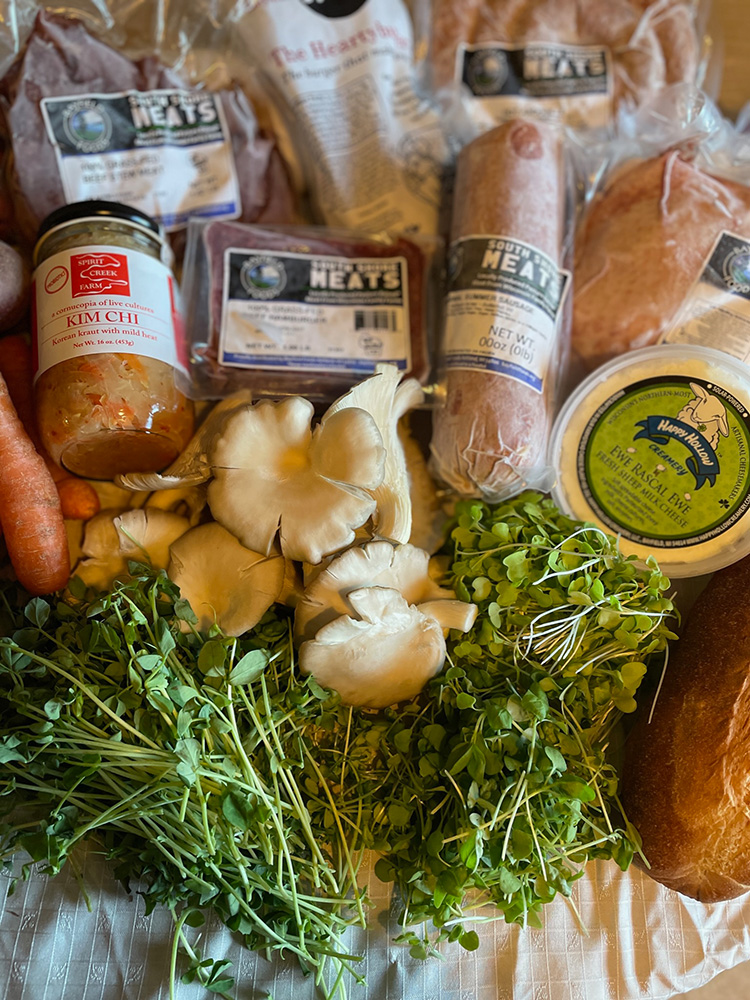
Inside each jar of Spirit Creek’s ferments are the combined efforts of three farms, four hardworking families, and years of experience. Fermented foods have a long history across many cultures, and Spirit Creek Farm has created a delicious line of ferments that highlight the flavor profiles of culinary traditions from across the globe, all while sourcing their raw ingredients from local farms.
Spirit Creek Farm was started in Cornucopia, WI, nearly two decades ago by Andrew and Jennifer Sauter-Sargent, who were searching for a way to live intentionally on the banks of Lake Superior while homeschooling their three children. Spirit Creek Farm emerged as the answer. According to Andrew, over the years, they have jarred about half a million “cornucopias of live cultured vegetables, bubbling with probiotics and lactobacilli to support digestion, health, and flavor.”
Since its founding, Spirit Creek Farm has partnered with farmers in Wrenshall for their cabbage, including Northern Harvest Farm, Uff-Da Organics, and Food Farm. A strong relationship formed, and when the Sauter-Sargents decided to sell, Rick Dalen of Northern Harvest Farm and Adam Kemp of Uff-Da Organics did not ferment too long when considering the acquisition.
“The products themselves are of exceptionally high quality,” Dalen remarked about Spirit Creek Farm’s offerings. “We have worked very closely with the previous owners and successfully learned how to replicate the quality and consistency the Spirit Creek name is known for.”
Adam Kemp and Rick Dalen, owners of Spirit Creek Farm.
With the fermentation process now relocated to a new facility in Wrenshall, both growing and processing occur in the same location. “We are not only the kraut makers,” Dalen explained. “We are also the farmers who grow the raw ingredients. We get to be part of each aspect of the process, which is pretty unique!”
Dalen shared that motivations for taking on Spirit Creek Farm included offering year-round employment to farmers as well as providing a stable and long-term market for the families who own the operation.
Spirit Creek Farm embodies the spirit of collaboration. Food Farm, which continues to partner with Spirit Creek, employed Dalen before he had his own farm. In addition, Kemp has been collaborating with Dalen as his co-manager at Northern Harvest for years. Like the jars of fermented goodness they create, every ingredient can stand alone, but when combined they also create something extraordinary.
Spirit Creek Farm highlights an all-star team of farmers dedicated to sustainable practices. These farms embody a vision for a more interconnected and responsible approach to food production and we are proud to showcase their passion at Whole Foods Co-op
Spirit Creek Farm crew. Photo courtesy of Spirit Creek Farm.
Mary B and Jay Newcomb met in Duluth in 1974 and were both active members of the growing Whole Foods Co-op. More than just a grocery store, “It was a real community,” Jay said. As Owners, Mary B and Jay volunteered three hours a month, a requirement for all Owners at the time.
“I remember the honey,” Jay recalled of his volunteer tasks. “When we moved to the 8th Street store, the honey came in 50-gallon drums. We’d place them over the heater to warm the honey up so it would pour out.”
Mary B and Jay Newcomb
Founded in 1970, Whole Foods Co-op began as the Whole Foods Buying Club in Duluth’s Chester Creek neighborhood. It was a group of people who were passionate about locally grown and nutritious food, and alternative diets, like vegetarianism, who came together to make these whole foods accessible for the community.
“We wanted to make healthy food affordable and available to a lot of people,” Mary B shared. “[At that time] whole grains weren’t easy to find, and there was no big food distribution network for them.”
The Buying Club soon transformed into the Whole Foods Co-op, focusing on supplying nutritious and locally grown food to the community while enshrining into the burgeoning business the hallmark principles of a cooperative, including democratic principles, voluntary and open membership, and concern for community.
By the time the Newcombs joined, the Co-op had outgrown its original space in the basement of the Chester Creek House and moved to a location on 5th Street. It was gaining momentum and more Owners.
While the Co-op was built on strong community values, it was also becoming a business. People like Muriel Engstrom stepped up to help guide its financial success. “Muriel Engstrom was our rock,” Jay said. “We were all wild young people, and she kept us organized. She made sure the bills were paid.”
“She was an excellent role model,” Mary B added. “She did the bookkeeping and kept everything running smoothly.”
As the Co-op expanded, it needed to adapt. “We were growing, and we needed to be open more,” Mary B said. “We had to figure out how to serve more people.” Part of this was hiring consistent staff and expanding into a larger space.
Shifting away from the Owner/volunteer model, the Co-op grew into a more typical store model.
“It was a small step,” Jay said. “We didn’t want to go too far too fast.”
Soon, Fran Skinner, one of the founding Owners and long-time social justice advocate, helped launch the Creative Energies Collective. Comprised of paid staff and engaged Owners, the collective handled day-to-day operations and helped guide the Co-op through this period of growth.
“Creative Energies was organized by the Co-op workers,” Mary B explained. “It was the next step. When we knew the Co-op was surviving, then thriving, and we needed a way to manage daily decisions.”
Throughout all its growth, the Co-op’s success has always been rooted in the engaged Owners who shop, vote, and participate in events. “You have to build community to make this work,” Mary B said. “We’re participants, not spectators.”
Thanks to the dedication of Mary B, Jay, and countless other engaged Owners, Whole Foods Co-op has grown into a thriving two-store cooperative. Over the past five decades, it has supported food distribution networks that continue to bring nutritious food to Duluth while also supporting local farmers, and sparking positive change throughout the region.
“People want to be part of the real movement of cooperating with other people. So, it’s a successful place,” said Jay.
“We wanted to be a force for change, to make Duluth better for everyone,” Mary B said. Looking around the Co-op, Mary B added, “And we were right. It is possible to do this well.”
Whole Foods Co-op Celebrates 55 Years
This year Whole Foods Co-op marks 55 years of being community-owned and led, making positive impacts on local farmers, shoppers and the communities we serve. In celebration, we’ll be releasing a series of profiles of just a few of the many people across our history who’ve helped shape Whole Foods Co-op into what it is today.